

Sub-Total: $0.00
Sell Used Books for Cash Near Me: A 2026 How-To Guide
Table of Contents
- What You’ll Need Before You Sell Used Books for Cash
- Step 1: How to Prepare Books for Resale
- Step 2: Selling Used Books vs Store Credit
- Step 3: Where to Sell Vinyl Records and Media
- Step 4: The Drop-Off and Appraisal Process
- Step 5: How to Sell Used Books for Cash and Get Paid
- Common Mistakes to Avoid
- Frequently Asked Questions
Last Updated: September 30, 2026
What You’ll Need Before You Sell Used Books for Cash
The most common mistake people make when they sell used books for cash near me is showing up with boxes they haven’t sorted. That single habit costs you money before you walk through the door.
Here’s what to gather first:
- A box or two of books you’re ready to part with
- Any vinyl records, CDs, DVDs, or games you no longer want
- A valid photo ID for cash transactions
- A rough sense of condition for each item (we’ll help with this below)
- Your ISBN numbers if you want to check value beforehand
Step 1: How to Prepare Books for Resale
Preparing books for resale directly affects your offer. Clean spines, no musty smells, and intact pages all raise your trade-in value. Skip this step and you’re accepting whatever the buyer offers.
Condition Grading Guide
Book condition is the single biggest factor in what you’ll be offered. Here’s the grading scale most buyers use:
| Grade | Description | Typical Resale Appeal |
|---|---|---|
| Like New | No visible wear, crisp pages, no markings | Highest value, easy to sell |
| Very Good | Minor shelf wear, clean pages | Strong seller, most popular grade |
| Good | Some wear, may have light markings | Moderate value, still in demand |
| Acceptable | Heavy wear, writing, or stains | Low value, often bundled |
| Poor | Water damage, missing pages, broken spine | Rarely accepted |
Step 2: Selling Used Books vs Store Credit
Cash offers and store credit are two different deals, and the better choice depends on what you want next. Selling used books for cash means you walk away with money in hand. Store credit typically gives you more buying power for the same items, since the store can offer a higher value when you’re spending it back with them.
Here’s the trade-off in plain terms:
- Cash: Lower amount, immediate, no strings attached
- Store credit: Higher amount, only usable in-store, great if you’re hunting for replacements
Pro Tip
Before you decide, ask the buyer what your credit amount would be versus cash. The gap is often bigger than people expect, and it changes which option makes sense.
Before you decide, ask the buyer what your credit amount would be versus cash. The gap is often bigger than people expect, and it changes which option makes sense.
Step 3: Where to Sell Vinyl Records and Media
Vinyl records and media can be valuable, especially if you have first pressings or out-of-print titles. Where you sell them matters as much as what you have. Local shops that specialize in media resale tend to offer better prices than general thrift shops because they know the market demand.
Places you can take vinyl and media:
- Local record and book shops that buy directly
- Consignment arrangements where the store sells on your behalf
- Local marketplaces for high-value single items
- Online platforms for rare or collectible pieces
Online vs. Local Selling Platforms
Online platforms reach more buyers, but they come with shipping, fees, and waiting. Local selling gets you paid faster and lets you negotiate face to face. For bulk selling, local wins almost every time. For a single rare first edition, online may reach the one buyer willing to pay top dollar.
| Factor | Online Platforms | Local Buyers |
|---|---|---|
| Speed of payment | Days to weeks | Same day |
| Fees | Listing and shipping costs | None |
| Reach | National or global | Local area |
| Best for | Rare single items | Bulk collections |
Step 4: The Drop-Off and Appraisal Process
The drop-off and appraisal process is straightforward: you bring your items in, a buyer reviews them, and you get an offer. Most appraisals depend on volume. You’re never obligated to accept. But the difference between a strong offer and a weak one usually comes down to what the buyer checks first, and what you did before you walked in.
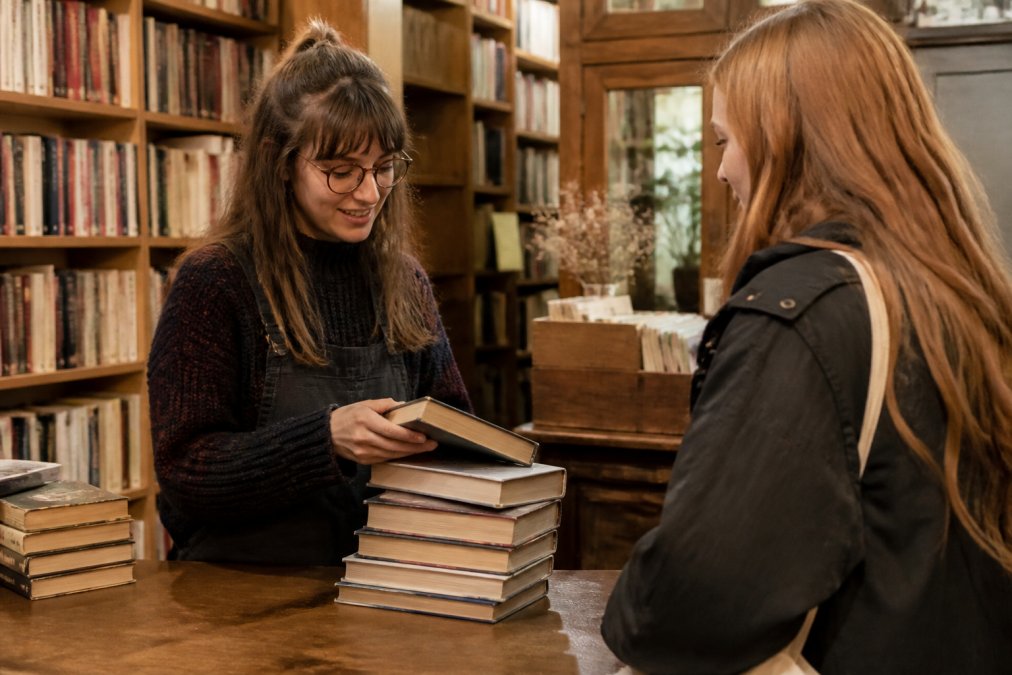
Here’s how it usually goes:
- Drop-off: Hand your items to the counter staff
- Inventory appraisal: The buyer checks condition, demand, and ISBN
- Offer: You receive a cash or credit figure
- Decision: Accept, negotiate, or take your items back
What the Buyer Actually Checks
A buyer isn’t reading your books cover to cover. They’re running a fast checklist, and knowing it lets you predict your offer before you hear it:
- ISBN scan: Most shops scan the barcode on the back cover or the copyright page. That pulls up the title’s current wholesale and used-market value in seconds. A book with no scannable ISBN, older paperbacks, book club editions, gets priced by hand.
- Condition tier: Spine creases, water stains, loose hinges, and heavy highlighting all drop the grade. A clean spine and tight binding are the two things buyers weigh most.
- Demand and inventory: Popular genres and current bestsellers move faster and earn more.
- Edition and printing: First editions, out-of-print titles, and signed copies get pulled aside for a closer look. Everything else is bulk-priced.
Call Ahead Before You Drive Over
This is the step most sellers skip, and it’s the one that saves the most time. A store’s buying policy changes, some pause cash buys during slow months, cap how many boxes they’ll take per visit, or stop accepting certain media entirely.
Before you load the car:
- Call or check the store’s page to confirm they’re currently buying and what hours the buy counter is staffed. The buy desk often keeps different hours than the sales floor.
- Ask about limits: How many boxes per visit? Is there a daily cash cap? Do they take textbooks, CDs, or DVDs right now?
- Ask what they pay with: Small hauls are usually cash; larger collections may be paid by check.
Large Collections Take Longer
A single box can be appraised while you wait. A collection of several boxes or a full estate haul usually can’t be priced on the spot. Expect to either leave items for a scheduled assessment or make an appointment. If you’re bringing more than a few boxes, call ahead so staff can block out time, and ask whether they’ll quote a range before you commit.
Pro Tip
Snap a photo of each box’s contents before you hand anything over. It’s a simple record of what you dropped off and makes any follow-up question easy to answer.
Snap a photo of each box’s contents before you hand anything over. It’s a simple record of what you dropped off and makes any follow-up question easy to answer.
Watch Out
You are never obligated to accept an offer. If the number is lower than you expected, it’s completely reasonable to thank the buyer, take your items back, and try another shop or an online buyer. No reputable store will pressure you to sell.
You are never obligated to accept an offer. If the number is lower than you expected, it’s completely reasonable to thank the buyer, take your items back, and try another shop or an online buyer. No reputable store will pressure you to sell.
Step 5: How to Sell Used Books for Cash and Get Paid
Getting paid is the easy part once you’ve accepted an offer. Most local buyers pay cash on the spot for smaller hauls and by check for larger collections. Bring your ID and expect a short processing time.
Price Estimation Tools: Check Value Before You Go
You can estimate what your books are worth before you ever leave the house, using the same ISBN the buyer will scan.
Where to find the ISBN:
-
On the back cover, above the barcode
-
On the copyright page, usually the first few pages inside
-
On the spine for some editions
-
Look up the ISBN in a book database or a used-book marketplace to see the title’s current listings and recent sold prices. What matters is what copies actually sold for, not what sellers are asking.
-
Compare condition: A “very good” copy and an “acceptable” copy of the same title can differ by several times in price. Match your copy to the closest grade before you judge an offer.
-
Check the edition: A first printing or out-of-print edition can be worth far more than a later reprint of the same title. The ISBN usually changes between editions, so confirm you’re pricing the right one.
-
Note the demand signal: If a title has dozens of cheap used copies listed, expect a low offer. If it has few listings and steady sales, expect more.
Cash, Check, or Credit: How You Get Paid
- Small hauls: Usually paid in cash on the spot.
- Larger collections: Often paid by check, which may mean a short processing wait or a mailed payment.
- Store credit: Applied immediately, and typically higher than the cash figure for the same items.
Bring a valid photo ID. Many shops are required to record it for cash transactions, and some cap the cash amount they’ll pay in a single visit.
Tax Implications of Selling Used Books
A few plain-language guideposts:
- Occasional personal sales: Selling your own used books at a loss is generally not reportable.
- Profit on items bought to resell: If you bought books specifically to resell them, the profit is business income and is reportable.
- High-volume or frequent selling: If you’re buying inventory, selling regularly, and treating it like a business, the IRS generally expects that income to be reported, and you may owe self-employment tax.
- Collectibles held as investments: A gain on a collectible you held as an investment may be reportable, sometimes at a different rate than ordinary income.
The line between a hobby and a business comes down to intent and pattern, profit motive, regularity, and how you treat the activity. The IRS guidance on hobby versus business income walks through the factors. If your sales are large or recurring, a tax professional is worth the cost.
Key Takeaway
Before you sell, look up the ISBNs on your best ten items and write down a realistic price range. That single habit tells you whether an offer is fair, whether to take cash or credit, and whether a rare title deserves a separate sale.
Before you sell, look up the ISBNs on your best ten items and write down a realistic price range. That single habit tells you whether an offer is fair, whether to take cash or credit, and whether a rare title deserves a separate sale.
Watch Out
Don’t assume every offer is final. If you’ve done your homework and know an item’s resale value, it’s reasonable to ask. Walking away is always an option.
Don’t assume every offer is final. If you’ve done your homework and know an item’s resale value, it’s reasonable to ask. Walking away is always an option.
Common Mistakes to Avoid
The biggest mistake is bringing unsorted, damaged items and expecting a top offer. Second, don’t ignore your rare books. Third, don’t accept the first cash offer without checking what store credit would give you.
A few more to watch:
- Overlooking condition: A torn dust jacket drops value fast
- Selling everything at once: Rare items deserve a separate look
- Skipping verification: Check ISBNs so you know what you have
Frequently Asked Questions
Where do you get the most money for used books?
Local independent bookstores can assess condition and demand in person. Selling used books for cash near me means comparing offers from several local buyers before committing.
What condition must books be in to be accepted for cash?
Most buyers require books to be in good readable condition with intact spines, no water damage, and minimal writing. Ex-library copies with stickers may be rejected. For cash offers, condition matters more than for store credit. Use our condition grading guide to check your books before you haul them in.
Should I choose cash or store credit when selling used books?
Cash gives you immediate money, while store credit often provides more value and can be used to buy other books, vinyl, or media. If you plan to buy more items, store credit stretches your dollar further. If you need money now, take the cash offer. Both options are available at local shops like Greatest Hits Music & Books.
How do local bookstores determine the value of used books?
They consider condition, demand, and current inventory. Popular genres like fiction and children’s books sell fast, while outdated nonfiction may sit. Rare or first editions can command higher prices. Some stores use price estimation tools to check resale value.
Clearing out a shelf feels good, but getting a fair price feels better. Greatest Hits Music & Books buys books for cash and offers store credit for your pre-loved books, music, movies, games, and figures. Bring your collection to our Tupelo shop, and our team will walk you through the appraisal, answer your questions, and help you decide between cash and credit. Get started with Greatest Hits Music & Books and turn those boxes in the garage into your next favorite treasure.