

Sub-Total: $0.00
How to Clean Vintage Book Covers Without Damage?
Last Updated: October 25, 2026
Quick Summary
To clean vintage book covers, first remove surface dust with a soft brush, then gently wipe cloth covers with a barely damp cloth and mild soap solution, while leather covers require conditioning after cleaning with pH-neutral soap and distilled water. Always air dry completely and avoid heat, harsh chemicals, and excessive moisture that can damage fragile materials.
- Assess cloth covers for loose threads or tears before cleaning; skip DIY cleaning if the binding is compromised.
- Identify leather type first, calf and sheep are most fragile and prone to red rot, while morocco is denser and more forgiving.
- Use distilled water instead of tap water, which contains minerals that can stain vintage book covers.
- Store cleaned books upright at 60-70°F and 30-40% relative humidity, away from direct sunlight and exterior walls.
- Seek professional help if books show mold, brittle pages, peeling covers, or are rare first editions.
Table of Contents
- Why Cleaning Vintage Book Covers Matters
- How to Clean Cloth Book Covers
- How to Clean Leather Book Covers
- Cleaning Supplies for Old Books
- Assessing Your Book Before Cleaning
- How to Store Vintage Books After Cleaning
- When to Skip DIY Cleaning and Seek Professional Help
- Restore Your Collection at Greatest Hits Music & Books
- Frequently Asked Questions
Why Cleaning Vintage Book Covers Matters
Vintage books are treasures, but dust, grime, and age accumulate on their covers, fading colors, weakening bindings, and attracting mold and pests, which is why clean vintage book covers matter so much. Cleaning vintage book covers protects your collection and preserves its condition.
The difference between a neglected book and a well-maintained one is dramatic: colors appear richer, material feels more supple, and proper cleaning slows deterioration.
When you bring in vintage books to sell or trade, cover condition directly affects value, books with clean, well-preserved covers command higher prices and attract serious buyers. Understanding how to value your vintage book collection helps you recognize the importance of proper care as part of preservation.
How to Clean Cloth Book Covers
Cloth book covers are common on older hardcover editions. They’re durable but require a gentle touch, the fabric can snag, fade, or absorb moisture.
Start by assessing the cloth for loose threads, tears, or weak spots. If the binding is compromised, skip DIY cleaning and seek professional help. For stable cloth covers, here’s the process:
Remove surface dust first:
- Use a soft brush or lint-free cloth
- Brush gently in one direction
- Work from the spine outward
Clean with minimal moisture:
- Mix a few drops of mild dish soap with cool water
- Dampen a soft cloth, not soaked, just slightly damp
- Wring out excess water before touching the book
Avoid these common mistakes:
- Never soak cloth covers or let water pool on the surface
- Don’t scrub hard or use abrasive cloths
- Skip bleach, vinegar, and harsh chemicals entirely
Stained or discolored cloth may not respond to gentle cleaning, the stain is often permanent. Acceptance beats damage from aggressive scrubbing.
How to Clean Leather Book Covers
Leather book covers require different care than cloth. Leather is a skin, porous, pH-sensitive, and dependent on internal oils to stay flexible.
Leather needs conditioning, not just cleaning.
First, identify the leather type:
- Calf and sheep are the most fragile and prone to red rot; treat them with extreme caution.
- Morocco (goatskin) is denser and more forgiving, but its grain can lift if over-wetted.
- Bonded leather is reconstituted leather fiber and often cannot be conditioned effectively; test first.
Clean leather covers this way:
- Dust gently with a soft, dry cloth or a soft brush first. Loose dust becomes abrasive mud if you wet it.
- Mix a small amount of mild, pH-neutral soap with distilled water. Tap water minerals can leave tide lines on leather.
- Test the solution on a hidden area, the inside of the spine or a back corner, and let it dry fully before proceeding.
After cleaning, condition the leather:
- Use a leather conditioner formulated for book bindings, not shoe polish, saddle soap, or furniture conditioner. Those products contain waxes, dyes, or solvents that can darken, stain, or soften book leather incorrectly.
- Apply sparingly with a soft cloth or fingertip. Too much conditioner makes leather greasy and attracts dust.
- Work it into the grain in thin layers rather than one heavy coat.
Watch Out
Leather that is already flaking, powdery, or peeling should not be aggressively cleaned. Red rot is a chemical breakdown of the leather itself, not surface dirt, and no conditioner reverses it. Conditioning can slow further loss, but stabilization usually requires a conservator. Do not attempt to glue down flaking leather with household adhesives, they stain, stiffen, and are difficult or impossible to reverse.
Leather that is already flaking, powdery, or peeling should not be aggressively cleaned. Red rot is a chemical breakdown of the leather itself, not surface dirt, and no conditioner reverses it. Conditioning can slow further loss, but stabilization usually requires a conservator. Do not attempt to glue down flaking leather with household adhesives, they stain, stiffen, and are difficult or impossible to reverse.
Common leather mistakes to avoid:
- Do not use vinegar, lemon juice, or “leather cleaners” with unknown ingredients; acidic products attack leather protein.
- Do not oil leather with neatsfoot oil, olive oil, or mink oil unless a conservator recommends it, over-oiling darkens leather and can migrate into paper.
- Do not dry leather with heat or direct sun; rapid drying causes warping and cracking.
Leather covers exposed to direct sunlight fade and harden faster than any other cover material, so storage matters as much as cleaning technique.
Different leather types require different care approaches, so identify your binding material before cleaning.
| Leather Type | Characteristics | Care Caution |
|---|---|---|
| Calf and sheep | Most fragile, prone to red rot | Treat with extreme caution |
| Morocco (goatskin) | Denser and more forgiving | Grain can lift if over-wetted |
| Bonded leather | Reconstituted fiber | Often cannot be conditioned effectively |
| Coated or patent leather | Factory-sealed surface | Do not condition at all |
Cleaning Supplies for Old Books
You don’t need expensive specialty products to clean vintage book covers properly. Simple, gentle supplies work best.
Essential supplies:
- Soft-bristled brush or lint-free cloths
- Distilled water (tap water contains minerals that can stain)
- Mild dish soap
Optional but helpful:
- Cotton gloves to prevent oils from your hands transferring to covers
- A small spray bottle for controlled moisture application
- Archival-quality boxes for storage after cleaning
Most of these items are already in your home. The key principle is gentleness: soft materials, minimal water, and light pressure protect vintage book covers from damage. Avoid “all-purpose cleaners” and “restoration solutions,” which often contain harsh chemicals.
Assessing Your Book Before Cleaning
Before cleaning any vintage book, evaluate its condition to determine whether DIY cleaning is safe or professional help is needed. Learn how to spot first edition books and identify which volumes may require extra care or professional handling.
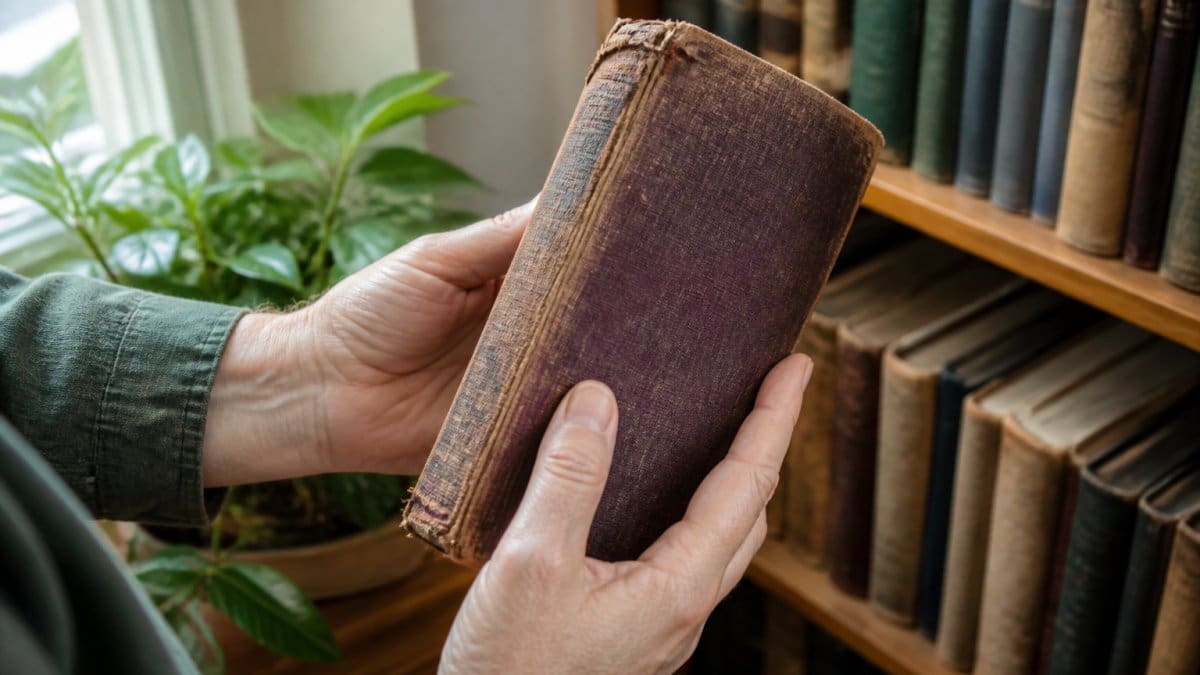
Check for these warning signs:
- Loose or peeling cover material
- Active mold or mildew (fuzzy growth, musty smell)
- Water stains or warped pages
Books with any of these issues need professional restoration, not home cleaning, attempting to clean a damaged book can make it worse.
If the book is stable, assess the cover material:
- Is it cloth, leather, paper, or a combination?
- Are there decorative elements like gilt lettering or embossing?
- Is the cover original or a later rebinding?
First editions and rare books deserve extra caution. If you’re uncertain about a book’s value or condition, consult professional rare book conservation guides before attempting any cleaning.
How to Store Vintage Books After Cleaning
Cleaning is only half the battle, storage conditions determine whether your effort pays off.
After cleaning and drying, store books upright with bookends or vertically on shelves.
Ideal storage conditions:
- Temperature: 60-70°F, stable and consistent. Fluctuation matters more than the exact number.
- Relative humidity: 30-40%. Below 30% dries leather and makes paper brittle; above 50% invites mold.
- Light: away from direct sunlight and UV. Even prolonged artificial light fades covers.
Monitor, don’t guess. A simple digital hygrometer, under $20, tells you the actual relative humidity.
What to do when conditions fluctuate:
- Short swings are tolerable; sustained extremes are not. A week at 60% humidity is a mold risk; an afternoon at 55% is usually fine.
- Never store books against an exterior wall, in a basement, or in an attic, those spaces see the widest swings and are the first to take on water.
- Keep books off the floor and away from pipes, windows, and HVAC vents.
Key Takeaway
Stable beats perfect. A collection held at a steady 68°F and 45% relative humidity will fare better than one that swings between 55°F and 80°F chasing an “ideal” number. Consistency is the single most protective storage decision you can make.
Stable beats perfect. A collection held at a steady 68°F and 45% relative humidity will fare better than one that swings between 55°F and 80°F chasing an “ideal” number. Consistency is the single most protective storage decision you can make.
Mold, pests, and water: prevention and first response
These three risks account for most serious damage to vintage book collections, and they are the ones most home guides skip.
- Mold and mildew. Musty smell, fuzzy growth, or foxing (brown spotting) signals moisture problems. Isolate the affected book immediately, mold spreads. Do not wipe mold with a damp cloth; that drives spores deeper. Move the book to a dry, well-ventilated area, reduce room humidity below 50%, and consult a conservator for active growth. Prevention is environmental: keep humidity in range and air moving.
- Pests. Silverfish, booklice, carpet beetles, and rodents chew paper and bindings. Signs include tiny holes, frass (insect droppings), and live insects. Keep storage areas clean, avoid cardboard boxes that harbor pests, and inspect incoming books before shelving them. If you find an infestation, isolate affected books, clean the area thoroughly, and consider professional pest advice, do not spray insecticides near books.
- Water damage. A leak, burst pipe, or spill can soak a shelf in minutes. First response matters: separate wet books immediately, stand them upright with pages fanned slightly open, and keep air moving. Do not stack wet books or press them while wet. For anything valuable or thoroughly soaked, contact a preservation professional, freezer storage can buy time by halting mold growth until a conservator can treat the books. Never use heat or direct sun to dry books; both warp and cockle paper permanently.
Direct sunlight fades covers and weakens fibers over time.
When to Skip DIY Cleaning and Seek Professional Help
Some books need professional restoration, not home cleaning, knowing when to stop is as important as knowing how to start.
Seek professional help if:
- The book shows signs of mold or mildew
- Pages are brittle, torn, or separating from the binding
- The cover is peeling, flaking, or severely damaged
Professional conservators have specialized training, tools, and materials that home cleaners lack, and can stabilize damaged books, repair bindings, and restore covers without further harm.
Professional restoration is the right choice for treasured or valuable books.
Restore Your Collection at Greatest Hits Music & Books
Your vintage book collection deserves proper care. Cleaning vintage book covers is the first step toward preservation, the next is ensuring your books are valued and protected.
Greatest Hits Music & Books understands the value of collections. Whether you’re looking to shop our collection of rare and vintage finds or you have books to sell or trade, we’re here to help.
Stop by Greatest Hits Music & Books to explore our curated selection of vintage books, rare finds, and nostalgic treasures. We buy books for cash and offer store credit for pre-loved media and collectibles.
Frequently Asked Questions
How do you clean a vintage book cover safely?
Start by assessing the cover material and condition. For cloth covers, use a soft dry brush or microfiber cloth to remove surface dust, then gently wipe with a barely damp cloth if needed. For leather covers, use a specialized leather cleaner applied sparingly with a soft cloth. Always test on an inconspicuous area first, work gently to avoid rubbing off printed text or decorative elements, and allow the book to air dry completely. Avoid water, harsh chemicals, and excessive pressure.
What cleaning supplies for old books should you keep on hand?
Essential supplies include soft-bristled brushes, microfiber cloths, distilled water, and pH-neutral cleaners. For cloth covers, keep a dry brush and lint-free cloth. For leather, use specialized leather cleaner.
Can you use a damp cloth to clean an old book cover?
Yes, but with extreme caution. Use only distilled water on a barely damp cloth, excess moisture damages paper, bindings, and adhesives. Wring out the cloth thoroughly so it’s almost dry before touching the cover. Never soak or saturate the book. Dampen the cloth only for stubborn dirt on robust cloth or leather covers, not for delicate or deteriorating materials. Always air dry the book completely in a well-ventilated space away from heat sources.
When should you avoid cleaning a rare or valuable book yourself?
Skip DIY cleaning if the book shows visible mold, mildew, or water damage; has loose or crumbling bindings; features gilt lettering or decorative elements that may flake off; is a first edition, signed copy, or known collectible; or has ink that runs when exposed to moisture. Rare books benefit from professional conservation. Contact a book conservator for assessment if you’re uncertain about a book’s value or condition.
Caring for vintage books takes patience and attention. Start with gentle assessment. Clean cloth and leather covers using minimal water and mild soap. Store your collection in a stable, dark environment with controlled humidity. When in doubt, seek professional help. These practices protect your books’ condition and preserve their value for years to come.
