

Sub-Total: $0.00
7 Real Benefits of Physical Media Over Streaming
Last Updated: October 26, 2026
Quick Summary
Physical media is entertainment stored on a tangible object you own, such as a Blu-ray, DVD, vinyl record, or CD, rather than streamed from a remote server. Its main benefits over streaming are stable, permanent access, better picture and sound quality, offline playback, and immunity to catalog changes and content removal.
- A standard Blu-ray tops out at 1080p, while a 4K Ultra HD Blu-ray reaches 2160p.
- Blu-ray discs routinely carry lossless surround formats such as Dolby TrueHD and DTS-HD Master Audio.
- A disc often pays for itself after a handful of viewings for heavy rewatchers.
- Offline playback means long flights, weak signal, and internet outages never touch a disc.
- A physical copy is immune to catalog changes, so the disc on your shelf stays yours.
Table of Contents
- Why Physical Media Still Wins for Collectors and Casual Viewers
- Physical Media Ownership vs Digital: What You Actually Own
- Blu-ray vs Streaming Quality: Resolution, Bitrate, and Audio
- Ongoing Subscription Costs vs One-Time Disc Purchases
- Streaming Internet Data Usage and the Offline Playback Advantage
- Catalog Changes, Content Removal, and Access You Can Count On
- Physical Media Preservation: Durability, Resale, and Long-Term Value
- Building Your Personal Library at Greatest Hits Music & Books
- Frequently Asked Questions
Why Physical Media Still Wins for Collectors and Casual Viewers
Physical media is any entertainment stored on a tangible object you own, such as a Blu-ray, DVD, vinyl record, or CD, rather than streamed from a remote server. That gap between owning a thing and renting access to it is the heart of the benefits of physical media over streaming.
Below, we break down seven concrete advantages, from picture quality to resale value, so you can decide where discs fit in your own habits.
Physical Media Ownership vs Digital: What You Actually Own
Forbes coverage of Gen-Z’s return to physical media notes that owning a disc gives people a sense of autonomy and control over how they interact with it.
For collectors, that control matters. A first-edition book or a rare pressing stays yours to lend, display, or sell.
Blu-ray vs Streaming Quality: Resolution, Bitrate, and Audio
But “better” is not a feeling, it comes from specific technical differences, and understanding them tells you when the gap will be obvious and when it will not.
Resolution is only the headline number
A standard Blu-ray tops out at 1080p, and a 4K Ultra HD Blu-ray reaches 2160p. Most major streaming services also advertise 4K on their premium tiers. So resolution alone does not separate the formats. What separates them is what happens to the picture after resolution: bitrate and compression.
Bitrate: the number that actually matters
In practice, this means a 4K stream and a 4K disc can both say “2160p” while carrying very different amounts of detail. The disc’s bitrate stays high through a dark, slow scene and through a fast action sequence alike. The stream’s bitrate can drop during exactly the moments that need the most data.
Where compression becomes visible
- Dark scenes. Shadows develop banding, visible steps between shades instead of smooth gradients, and blocky patches in near-black areas.
- Fast motion. Action sequences and camera pans can smear or lose fine texture as the encoder runs out of budget.
- Fine detail. Film grain, foliage, and fabric texture are often the first things to soften on a compressed stream.
HDR and audio formats
Audio is the clearest gap. Blu-ray discs routinely carry lossless surround formats such as Dolby TrueHD and DTS-HD Master Audio, plus object-based formats like Dolby Atmos on many titles. Most streams deliver compressed audio, which saves bandwidth but discards information. A disc’s surround mix often sounds fuller and more dynamic than its streamed counterpart, but only if your speakers and receiver can reveal the difference.
When the difference is obvious, and when it is not
- A large screen, where compression artifacts have room to show.
- A capable audio system, where lossless versus compressed audio is audible.
- A marginal connection, where adaptive streaming is forced to drop bitrate.
The ScienceDirect study on subscription streaming and DVD sales notes that physical discs provide stable, permanent access and may offer better picture and sound quality. If quality is your priority, what to look for when buying used vinyl covers the inspection habits that protect your investment.
Ongoing Subscription Costs vs One-Time Disc Purchases
A subscription is a recurring bill; a disc is a single payment you keep paying off in value every time you rewatch. But the honest version of this comparison is not “discs are cheaper”, it is “discs are cheaper for some viewing habits and more expensive for others.” The only way to know which side you are on is to run your own numbers against realistic scenarios.
The break-even question, framed honestly
A common pattern among heavy rewatchers is that a disc pays for itself after a handful of viewings, because the marginal cost of the fifth watch is zero. For a viewer who watches a title once and moves on, the disc is almost always the more expensive option, the subscription already covers that single viewing, and the disc adds shelf space and a player to the equation.
What the subscription side actually costs
- Multiple services. Most households subscribe to more than one service at a time, and the combined monthly total is what matters, not any single price.
- Price increases. Providers raise prices on their own schedule. A subscription you signed up for at one rate can renew at a higher rate with notice, and the increase applies whether or not you watch more.
- Ad tiers and feature gates. Lower-priced tiers often trade ads or resolution limits for the discount, so the “cheap” plan may not deliver the quality you actually want.
- Hardware and bandwidth. A streaming-first household typically budgets for a capable TV, a streaming device, and enough internet bandwidth for multiple simultaneous streams.
What the disc side actually costs
- The disc itself. New releases cost more than catalog titles, and used copies cost less, the secondary market is a real cost lever.
- A player. A Blu-ray player is a one-time purchase that lasts years; many households already own a game console that plays discs.
- Storage. Shelving or a media cabinet is a real cost, though a modest one compared with recurring subscriptions.
- Replacement risk. Discs can be scratched, lost, or damaged, and that is a cost the subscription model does not carry.
A realistic scenario comparison
Rather than declare a winner, map your own habits onto three common patterns:
| Viewing pattern | Streaming-heavy fit | Disc-heavy fit |
|---|---|---|
| Watches many titles once, rarely rewatches | Strong, subscription covers breadth | Weak, discs accumulate unwatched |
| Rewatches a small set of favorites regularly | Weak, favorites rotate off catalogs | Strong, marginal cost per rewatch is zero |
| Household with mixed tastes and kids’ favorites | Mixed, breadth plus a few keeper discs | Strong for the keeper titles |
Streaming Internet Data Usage and the Offline Playback Advantage
Offline playback is the quiet superpower of physical media. Long flights, rural stretches with weak signal, storm-related internet outages: none of it touches a disc. You press play and it works. Streaming depends on steady bandwidth, and buffering interrupts the exact scenes you waited all week to watch. Households with several people streaming at once feel this most. Even when network conditions are optimal, the inherent limitations of software-based playback often necessitate the integration of specialized streaming hardware to bridge the gap between digital convenience and the reliability of a physical collection.
Catalog Changes, Content Removal, and Access You Can Count On
A physical copy is immune to catalog changes. The disc on your shelf does not care who holds the rights this year. For families with favorite holiday films or collectors chasing specific editions, that permanence is the whole point. Availability you can count on is worth more than a giant rotating catalog you do not control.
Physical Media Preservation: Durability, Resale, and Long-Term Value
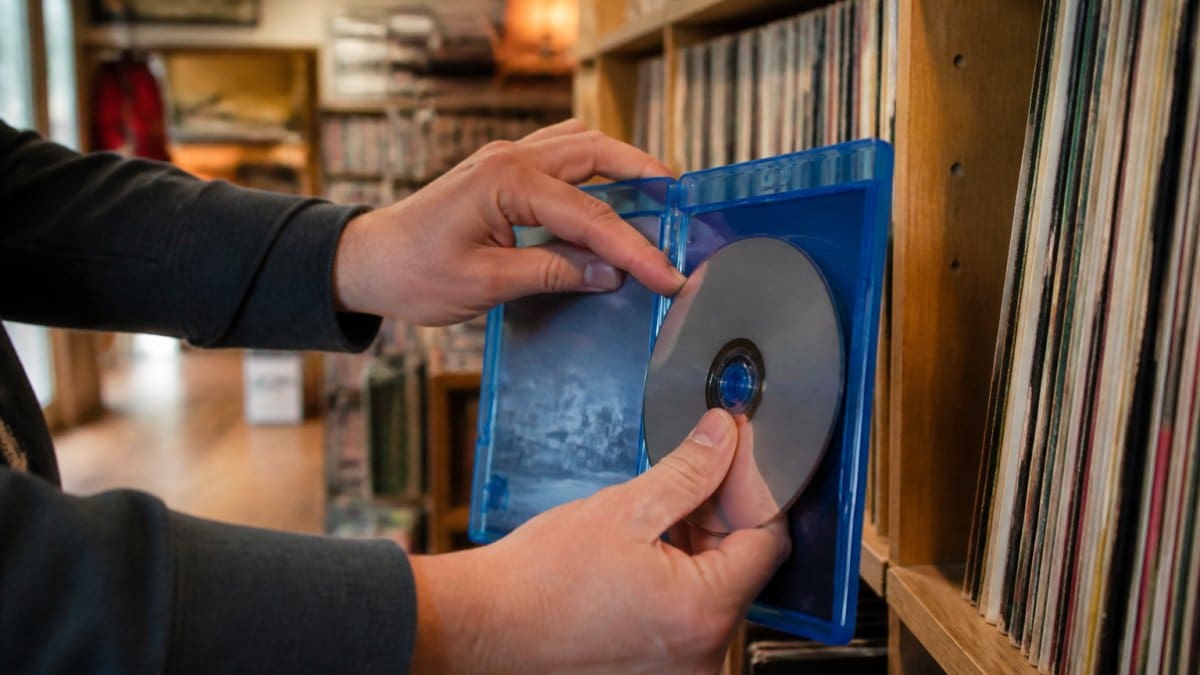
Our guide to the benefits of buying used physical media explains how to build a collection without paying retail, and if you are ready to clear space, where to trade in used movies walks through cash versus credit.
Building Your Personal Library at Greatest Hits Music & Books
At Greatest Hits Music & Books, we stock used books, vinyl records, movies, games, and nostalgic finds, from bestselling fiction to rare vintage pieces. We also pay cash for books and offer store credit for books, music, movies, games, and figures.
Ready to start? Explore vinyl records and music collections and see what belongs on your shelf.
Frequently Asked Questions
Do you actually own movies you buy digitally?
In most cases, no. Buying a digital movie usually grants a license to access it through that platform, not ownership of the file itself. If the service shuts down or loses the rights, the title can disappear from your library. A disc or a record is yours to keep, lend, resell, or play on any compatible device, which is the core of the physical media ownership vs digital argument.
Is Blu-ray quality better than streaming?
Yes, in most cases. A Blu-ray disc stores the film at a much higher bitrate than a streaming service typically delivers, so you get less compression and steadier image quality. Streaming quality also depends on your internet connection, while a disc plays the same way every time. Audio is often the bigger gap, since discs regularly carry lossless soundtracks that streaming may compress.
Can streaming services remove movies and shows?
They can and do. Licensing deals expire, and titles leave a catalog without warning, even ones you added to a watchlist. That is why content removal is one of the strongest benefits of physical media over streaming: a disc on your shelf cannot be pulled by a contract negotiation. If a film matters to you, owning a physical copy is the surest way to keep access.
Does streaming use more internet data than watching a disc?
Streaming internet data usage adds up fast, especially in 4K, where a single film can consume several gigabytes per viewing. Discs use no data at all because the movie lives on the platter. If you have a data cap, a slow connection, or frequent outages, offline playback from a disc or a downloaded file keeps the movie running when streaming would buffer or stop.
The streaming convenience is real, but so is the frustration of losing access to something you thought you owned. If you want a collection that stays yours, we can help. Greatest Hits Music & Books offers a huge selection of records, movies, books, and games, pays cash for books, and gives store credit for your pre-loved media. Get started with Greatest Hits Music & Books and build a library you actually own.
