

Sub-Total: $0.00
What to Look for When Buying Used Vinyl: A 2026 Guide
Table of Contents
- Understanding Record Grading Standards
- How to Check Vinyl Records for Scratches and Surface Marks
- Assessing Record Condition: What to Look for When Buying Used Vinyl
- Evaluating Playback Quality and Testing Before You Buy
- Inspecting the Sleeve, Jacket, and Edition Details
- Using a Buying Used Records Checklist
- How to Clean Used Vinyl Records and Maintain Condition
- Comparing Price with Condition and Fair Value
- Frequently Asked Questions
Last Updated: October 5, 2026
Understanding Record Grading Standards
Knowing how to grade vinyl records is the foundation of making smart purchasing decisions. Record grading systems provide a standardized way to describe condition, helping you understand what you’re actually getting before you buy.
At Greatest Hits Music & Books, we recognize that grading standards help both buyers and sellers communicate clearly about condition.
The grading scale also accounts for the sleeve and jacket separately from the disc itself. Always check both grades when evaluating a used record listing.
Pro Tip
When shopping online, always ask the seller for separate grades for the vinyl and the sleeve. A record with a perfect disc but a worn jacket is often a better value than one with both in mediocre condition.
When shopping online, always ask the seller for separate grades for the vinyl and the sleeve. A record with a perfect disc but a worn jacket is often a better value than one with both in mediocre condition.
How to Check Vinyl Records for Scratches and Surface Marks
Light and magnification techniques
Inspecting a record properly requires the right lighting and magnification. Hold the record at an angle under bright, direct light, a desk lamp or natural sunlight works well.
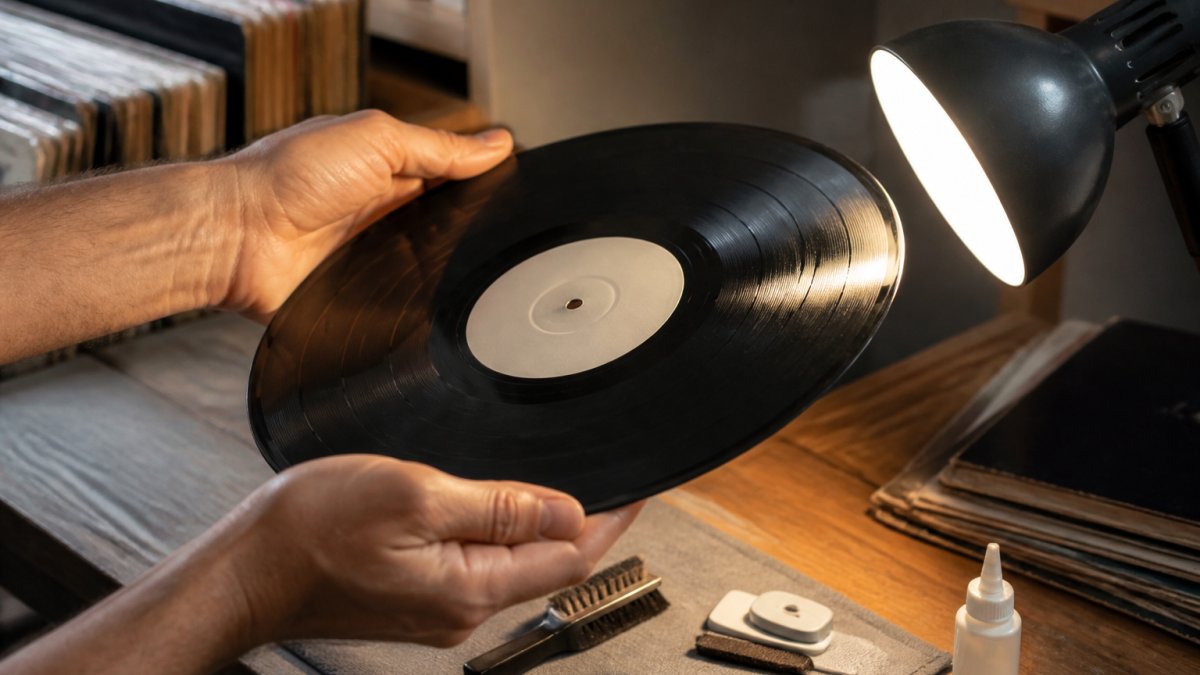
A magnifying glass helps you distinguish between minor surface scratches and deeper gouges.
Pay attention to the pattern of wear. Records that were played frequently show wear radiating from the center outward, with heavier wear in the grooves.
Distinguishing playable wear from serious damage
Not all surface marks are deal-breakers. Light hairline scratches and fine dust marks are common on used vinyl and rarely affect playback.
Run your fingernail gently across the surface, you shouldn’t feel deep gouges catching your nail. If a scratch is shallow enough that your nail glides over it smoothly, it’s likely playable.
Warping and deep gouges are the serious red flags. A warped record won’t sit flat on the turntable and will cause the stylus to skip.
Watch Out
A record with visible cracks or severe warping will likely skip during playback and may damage your turntable stylus. Even if the price is tempting, damaged records are rarely worth the risk.
A record with visible cracks or severe warping will likely skip during playback and may damage your turntable stylus. Even if the price is tempting, damaged records are rarely worth the risk.
Assessing Record Condition: What to Look for When Buying Used Vinyl
Warping and structural integrity
Warping is one of the most common issues with used vinyl and one of the hardest to fix.
Minor warping might not affect playback if it’s very slight, but significant warping makes a record unplayable. Some collectors attempt to flatten warped records using heat, but this method is risky and often unsuccessful.
Labels can also indicate structural problems. If the label is peeling away from the vinyl or if there’s visible separation between the label and the disc, moisture damage may have occurred.
Label condition and pressing quality
The label tells you important information about the record’s origin and pressing. Original labels from the first pressing are typically more desirable to collectors than reissue labels, and they often indicate better sound quality.
Pressing quality varies significantly even within the same title and edition. Some pressings are known for superior sound, while others have manufacturing defects like surface noise or off-center pressing.
Check the label for any indication of the pressing plant or pressing number. Different pressings of the same album can have dramatically different sound quality, so knowing the pressing is valuable when buying used vinyl.
Evaluating Playback Quality and Testing Before You Buy
The only true test of a record’s playability is listening to it. If you’re buying in person, ask the seller if you can play a track or two on their equipment.
Surface noise is normal on used records, especially in the quieter passages between songs. A few light crackles or pops don’t necessarily indicate a defective record.
Pay attention to the clarity of the vocals and instruments. A heavily worn record will sound duller and less detailed than a clean copy.
Key Takeaway
The best way to evaluate playback quality is to listen to at least one full side of the record before purchasing. If you can’t test it first, buy only from sellers with strong track records and detailed condition descriptions.
The best way to evaluate playback quality is to listen to at least one full side of the record before purchasing. If you can’t test it first, buy only from sellers with strong track records and detailed condition descriptions.
Inspecting the Sleeve, Jacket, and Edition Details
Original versus reissue pressings
Original pressings, the first release of an album, are typically more valuable and often sound better than later reissues.
Reissues often have modern barcodes, updated label designs, or different catalog numbers than the original pressing. Original pressings from the 1960s and 1970s rarely have barcodes, since that technology wasn’t standard until later.
The condition of the sleeve also affects value. An original sleeve with minimal wear, no seam splits, and intact spine text is significantly more valuable than a reissue with a generic cover.
Collectibility and rarity factors
Certain pressings, editions, and variants are rare and highly sought after by collectors. Limited editions, colored vinyl variants, and pressings from specific labels or years can command premium prices.
Condition matters more for rare records. A Near Mint original pressing of a rare album might be worth significantly more than a Very Good copy of the same pressing.
Edition details like “Remaster,” “Reissue,” or “Special Edition” should be verified against the catalog number and label design.
Using a Buying Used Records Checklist
Creating a systematic approach to evaluating records prevents impulse purchases and ensures you’re getting fair value. A practical checklist helps you assess condition consistently, whether you’re shopping in person or buying online.
Record Condition Assessment:
- Vinyl surface: Check under bright light for scratches, scuffs, and warping
- Play-test: Listen to at least one full side if possible; note any skips, pops, or distortion
- Label condition: Verify labels are intact, centered, and free of damage or writing
- Pressing quality: Confirm the pressing plant and pressing number match expected details
Sleeve and Packaging:
- Jacket condition: Check for seam splits, creasing, water damage, or stains
- Original versus reissue: Verify the pressing by examining label design and catalog numbers
- Completeness: Confirm all inserts, booklets, or bonus materials are present if claimed
Value and Fair Pricing:
- Market comparison: Research similar copies to understand fair pricing for this condition
- Rarity: Identify pressing variants and determine if this is a desirable edition
- Intended use: Decide whether you’re buying for collecting, investment, or listening
When buying used vinyl online, request detailed photos of both sides of the record, the label, and the sleeve. Ask specific questions about any visible wear and request separate grades for the vinyl and packaging. This information helps you make informed decisions without handling the record first.
How to Clean Used Vinyl Records and Maintain Condition
Proper cleaning and storage preserve the condition of your records and protect your investment. Before playing a used record, gently clean the surface to remove dust and debris that can cause pops and crackles during playback.
A soft-bristled record brush removes loose dust without damaging the grooves. Brush gently in a circular motion, following the grooves from the center outward. For more thorough cleaning, use a record cleaning solution specifically designed for vinyl and a microfiber cloth.
Store records vertically in a cool, dry location away from direct sunlight and heat sources. Records stored in poor conditions, high heat, humidity, or direct sunlight, degrade faster and develop mold or warping (Care, Handling, and Storage of Audio Visual Materials – Collections Care).
Comparing Price with Condition and Fair Value
Fair pricing for used vinyl depends on several factors: the record’s condition grade, rarity, original pressing status, and current market demand.
Research comparable sales on collector marketplaces and record databases. Many records have multiple pressings at different price points, so knowing which pressing you’re evaluating is crucial.
When buying used vinyl, balance your budget against realistic condition expectations.
At Greatest Hits Music & Books, we understand the challenge of finding fair-priced used vinyl with accurate condition descriptions.
Frequently Asked Questions
How can you tell if a used vinyl record is in good condition?
Check for visible scratches, warping, and label damage using bright light and magnification. Play-test the record to listen for skips, crackles, or pops that indicate surface wear. Examine the sleeve and jacket for tears, stains, or adhesive damage. A record in good condition should have minimal surface marks, play without significant noise, and come in an undamaged sleeve. Compare the asking price to the record’s grade and market value to assess whether the condition matches the cost.
What does vinyl grading mean, and how does it affect sound quality?
Vinyl grading uses a standardized scale (Mint, Near Mint, Very Good Plus, Very Good, Good, Fair, Poor) to describe condition. Higher grades indicate fewer scratches, less surface noise, and better playback. A VG+ record may have light surface marks but plays cleanly; a VG record shows noticeable wear and may have occasional pops or crackles. Lower grades produce more noise and skips. Grading helps you predict sound quality before purchase and understand whether the price reflects the condition you’re getting.
Is it worth buying used vinyl records?
Yes, if you inspect carefully and understand what you’re purchasing. Used vinyl costs significantly less than new copies and often includes original pressings or out-of-print editions unavailable elsewhere. The key is matching price to condition and confirming playback quality before committing. Buying from reputable sellers who describe condition accurately and allow inspection or testing reduces risk. For collectors seeking rare pressings or budget-conscious listeners, used vinyl offers genuine value when you know what to look for.
How should you clean a used vinyl record before playing it?
Use a soft, lint-free cloth or dedicated vinyl brush to remove dust and debris before playing. For deeper cleaning, apply a specialized vinyl cleaning solution with a microfiber cloth, working in circular motions from the center outward. Rinse gently with distilled water if needed and dry completely. Never use household cleaners, abrasive materials, or excessive water, as these damage the surface. Regular light cleaning extends the life of both the record and your stylus. Allow records to dry completely before storing or playing.
What should you look for when buying a used record in person versus online?
In person, you can inspect the record under bright light, test playback on store equipment, and feel the record’s weight and surface texture. You avoid shipping damage and can negotiate price directly. Online purchases require detailed seller descriptions, high-resolution photos, and clear return policies. Ask sellers about play-testing, request photos of both sides and the label, and confirm shipping protection. In-person shopping offers immediate verification; online buying offers convenience and access to rare records outside your local area. Choose based on your priority: certainty or selection.
How can you tell if a used vinyl record is a bad pressing?
Bad pressings show manufacturing defects such as heavy surface noise unrelated to wear, skips or jumps that occur consistently in the same spot, warping that affects playback, or labels that are off-center or poorly applied. Play-test the record to listen for these issues. Research the pressing on discography sites to identify known problematic editions. Compare the record’s sound to reviews or other copies of the same pressing. A bad pressing costs less but may not be worth buying unless you’re collecting for rarity rather than audio quality.
How do you know if a used vinyl record is priced fairly?
Research recent sales of the same title, pressing, and condition on marketplace sites and discography databases. Compare the asking price to the record’s grade and rarity. Original pressings and first editions typically cost more than reissues. Condition directly affects value: a VG+ copy may be worth 50-100% more than a VG copy of the same record. Factor in local demand and seller reputation. If the price seems significantly lower than comparable sales, verify that the condition description is accurate and check for undisclosed defects before assuming it’s a bargain.
Should you play-test a used vinyl record before buying it?
Yes, whenever possible. Play-testing confirms that the record plays without skips, crackles, or pops and that the pressing quality matches the seller’s description. In-person shopping at a store with turntables allows immediate testing. If buying online, request that the seller confirm playback or provide a detailed video demonstration. For valuable records, the small cost of shipping a test copy is worth the certainty. Play-testing is the only way to catch defects that visual inspection misses, such as internal pressing flaws or damage that doesn’t show on the surface.
Finding the right used vinyl requires patience, knowledge, and a systematic approach to evaluation. By understanding grading standards, inspecting records carefully, and researching fair pricing, you’ll make confident purchasing decisions and build a collection you’ll enjoy for years. Shop Our Collection at Greatest Hits Music & Books and discover curated vinyl selections where you can inspect records in person and get expert guidance on condition and value.