

Sub-Total: $0.00
Rare Book Collection: 7 Essential Tips for Collectors
Table of Contents
- What Makes a Book Rare Enough for Your Collection
- How to Identify a First Edition Book
- Rare Book Valuation: What Drives the Price
- Where to Buy Rare Books Without Getting Burned
- How to Store Rare Books So They Hold Their Value
- Collection Ideas: Signed, Limited, and Children’s Books
- Budgeting, Insurance, and Planning Your Collection
- Conclusion
- Frequently Asked Questions
Last Updated: October 17, 2026
What Makes a Book Rare Enough for Your Collection
A book is rare when scarcity, historical or literary significance, and condition combine to make surviving copies hard to find. This guide covers the seven habits that separate a focused rare book collection from a shelf of old volumes.
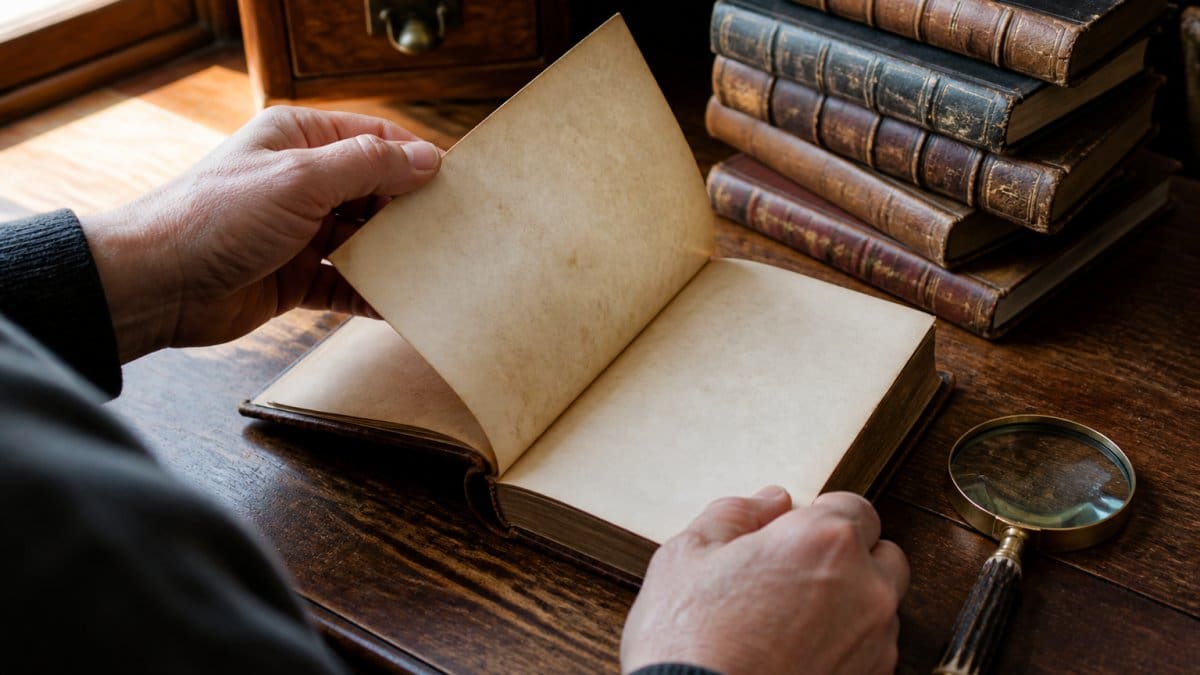
Scarcity usually comes from a small print run, a limited edition, or copies lost to time. Significance can come from the author, the era, or the book’s role in a larger story.
Scarcity, Significance, and Condition
Scarcity is the easiest factor to understand: fewer surviving copies means more demand per copy. First printings, limited editions, and out-of-print books all sit here.
Many collectors find that condition is the factor they underestimate first. A worn dust jacket, a cracked hinge, or a loose title page can pull a book down several tiers. Learn to judge all three factors before you spend.
How to Identify a First Edition Book
First editions and first printings are identified by matching the title page, copyright page, and edition points against a publisher’s own records. There is no shortcut.
Start with the copyright page. Look for a “First Edition” statement, a number line, or a date that matches the title page. A Library of Congress catalog and bibliographic records search can confirm publication dates and editions for many titles.
Reading the Number Line
Most modern trade publishers use a number line, sometimes called a print line, on the copyright page. A line reading “10 9 8 7 6 5 4 3 2 1” indicates a first printing; when the publisher reprints, it removes the lowest number, so “10 9 8 7 6 5 4 3 2” signals a second printing. Some publishers reverse the order or use a date code instead.
Edition Points That Matter
Edition points are the small differences a publisher introduced between printings. Common examples include a misprint that was later corrected, a changed price on the dust jacket flap, a different publisher’s name on the spine, or a stated “First Printing” that disappears in later runs. For older books, the presence or absence of an advertisement section, a particular colophon, or a specific binding cloth can separate a true first from a later issue.
Watch for Book Club and Facsimile Editions
Book club editions often mimic the trade first edition but lack a price on the dust jacket, carry a book club indent on the back cover, or state “Book Club Edition” on the flap. Facsimile editions reproduce an older book’s appearance and can fool a buyer who checks only the title page. Both are legitimate reading copies but are not first editions, and they should be priced accordingly.
Verify Signatures and Inscriptions
A signed copy is only worth a premium if the signature is genuine. Compare the signature against known examples from the author’s signed books, check whether the ink matches the era, and look for an inscription that names a recipient or date.
A common mistake is trusting the words “first edition” alone. Many publishers print those words on later printings too.
Rare Book Valuation: What Drives the Price
Rare book valuation comes down to five drivers: scarcity, condition, provenance, demand, and comparable sales. Price guides give a starting point, but the market sets the final number. A book is worth what a serious buyer will pay for it on a given day.
Provenance, Signatures, and Auction Records
Provenance is the documented history of who owned a book and how it moved between owners. A signed or inscribed copy with a clear chain of ownership commands far more than an unsigned copy in similar shape. A Biblio’s guide to identifying valuable books is a useful starting point for sorting an older collection into “worth researching” and “worth keeping for reading.”
Pro Tip
When you research a value, search completed sales rather than asking prices. Asking prices are wishes; completed sales are evidence. Compare at least three completed sales of the same edition in similar condition before you decide what a book is worth.
When you research a value, search completed sales rather than asking prices. Asking prices are wishes; completed sales are evidence. Compare at least three completed sales of the same edition in similar condition before you decide what a book is worth.
Where to Buy Rare Books Without Getting Burned
Buy rare books from sellers who document condition, provide clear photographs, and stand behind their listings. A Federal Trade Commission guide to online shopping is worth reading before you send money to an unfamiliar seller, because the same fraud patterns show up in the book trade.
Here is how we would approach a purchase:
- Ask for photographs of the title page, copyright page, binding, and any signatures.
- Confirm the edition points against the seller’s description before you pay.
- Check the return policy in writing, especially for higher-value books.
- Prefer sellers with a track record and verifiable feedback over anonymous listings.
That last point matters. At Greatest Hits Music & Books, browsing the shelves lets you check condition yourself and spot the vintage finds that never make it to an online listing. BookFinder’s rare and out-of-print search is useful for comparing offers on a specific title, but nothing replaces holding the book.
Spotting Misleading Listings
A listing that calls a book “rare” without explaining why is a warning sign. Rarity claims should point to a small print run, a specific edition, or a documented scarcity, not to the seller’s opinion. Watch for these patterns:
- Facsimile or reprint editions described as originals. Check the copyright page for a modern reprint date and compare the binding against known originals.
- Restoration that is not disclosed. Rebacked spines, replaced endpapers, and color-touched jackets can look clean in photos. Ask directly whether the book has been repaired.
- Unsupported signature claims. A signature without provenance or a known signing record is a gamble, not a premium.
- Stock photos instead of actual images. If the seller will not photograph the copy you are buying, assume the worst.
- Pressure tactics. A seller who demands immediate payment or refuses returns is not offering a safe transaction.
Buying at Auction and from Dealers
Auction houses publish condition reports and provenance, and the major houses stand behind their cataloging, but buyers still pay a buyer’s premium on top of the hammer price, so budget for it. Established antiquarian dealers belong to trade associations that require a code of ethics and often offer reciprocal return privileges. A dealer’s description is usually more detailed than an anonymous listing, and the relationship is worth more than a one-time bargain.
Watch Out
Never wire money to a seller you cannot verify. Use a payment method with buyer protection, keep the listing and all correspondence, and confirm the return window before the book ships. A scarce book at a suspiciously low price is usually a reprint, a book club edition, or a book with undisclosed restoration.
Never wire money to a seller you cannot verify. Use a payment method with buyer protection, keep the listing and all correspondence, and confirm the return window before the book ships. A scarce book at a suspiciously low price is usually a reprint, a book club edition, or a book with undisclosed restoration.
Check Condition Before You Commit
Ask for photographs of the hinges, the spine ends, the corners, and the text block edges, not just the cover. Foxing, water stains, and loose signatures are easy to hide in a single flattering image. If the seller cannot provide them, treat the condition as unknown and price the risk into your offer.
How to Store Rare Books So They Hold Their Value
Store rare books upright on a stable shelf, away from direct sunlight, heat, and damp. Control the environment, handle the books with clean hands, and give fragile volumes proper protection. Storage is where casual collectors lose value without noticing.
Use these rules as a baseline:
- Keep shelves out of direct sun; ultraviolet light fades spines and jackets.
- Avoid attics, basements, and garages, where temperature and humidity swing.
- Store books upright and support them so they do not lean and warp.
- Use acid-free boxes or sleeves for fragile dust jackets and loose pages.
- Keep food and drink away from the collection, and never store books in sealed damp spaces.
Watch Out
Storing books in a damp basement or garage is the fastest way to lose value. Mildew, foxing, and warped boards are usually permanent, and a scarce book with water damage drops several tiers in the market.
Storing books in a damp basement or garage is the fastest way to lose value. Mildew, foxing, and warped boards are usually permanent, and a scarce book with water damage drops several tiers in the market.
Collection Ideas: Signed, Limited, and Children’s Books
Build a rare book collection around a theme you actually care about. Signed editions, limited print runs, and children’s books each offer a clear scope, and a focused collection is easier to research and easier to value than a random shelf.
- Signed and inscribed copies carry a direct link to the author, and an inscription with a name or date adds provenance.
- Limited editions are numbered and usually small, which makes scarcity easy to document.
- Children’s and illustrated books reward collectors who care about artwork, and early illustrated works often survive in far fewer copies than adult fiction.
- First editions of a single author give you a defined list to hunt and a clear way to measure progress.
A common mistake is collecting too broadly at the start. Pick one theme, learn its edition points, and let the collection grow from there.
Budgeting, Insurance, and Planning Your Collection
Plan a rare book collection like any other asset: set a budget, document what you own, and protect it. A collection without records is hard to insure and harder to pass on.
| Planning Area | What to Do | Why It Matters |
|---|---|---|
| Budget | Set a monthly or annual cap and stick to it | Prevents impulse buys that dilute focus |
| Documentation | Photograph each book and record edition, condition, and provenance | Supports insurance claims and estate planning |
| Insurance | Ask your insurer about valuable-item coverage | Standard policies often cap collectibles |
| Storage | Invest in acid-free protection and stable shelving | Preserves condition and value |
| Estate planning | List the collection and note intended recipients | Avoids disputes and lost value |
Many collectors find that documentation is the step they skip, and it is the one that costs them later. A simple spreadsheet with photographs and edition notes is enough to start.
Conclusion
Building a rare book collection takes patience, a clear focus, and honest research, and the collectors who succeed treat it as a long game rather than a shopping spree. If you are ready to start or add to yours, come browse our shelves at Greatest Hits Music & Books. We offer a huge selection of books, records, movies, games, and nostalgic finds, we pay cash for books, and we offer store credit for books, music, movies, games, and figures.
Frequently Asked Questions
How do you start a rare book collection on a budget?
Start with a clear scope, such as one author, one genre, or one era, and buy the best copy you can afford rather than many average ones. Focus on signed copies, limited print runs, and first printings of books you genuinely love. Set a monthly budget and track what you spend. Local shops, estate sales, and used bookstores often price overlooked titles well below online market rates, so browse regularly and learn edition points before you spend big.
How can you tell if a book is a first edition?
Check the copyright page for a full number line (like 10 9 8 7 6 5 4 3 2 1) with the 1 present, or the words ‘First Edition’ or ‘First Printing.’ Match the publisher and publication date to the title page, and verify edition points specific to that title using a bibliographic reference. Book club editions and later printings often look identical at a glance, so confirm the details before assuming a first edition.
What makes a book rare or collectible?
Scarcity, historical or literary significance, condition, and demand all play a role. A book becomes collectible when few copies survive in good shape and enough readers want them. First printings, signed or inscribed copies, limited editions, and books tied to major cultural moments command the most attention. Age alone does not make a book rare; a 200-year-old common volume can be worth far less than a 50-year-old first printing in fine condition.
How should rare books be stored at home?
Keep books in a cool, dry room away from direct sunlight, with stable temperature and low humidity. Store them upright on sturdy shelves, using bookends so they don’t lean, and keep dust jackets in protective covers. Avoid attics, basements, and garages where moisture and heat fluctuate. For high-value volumes, use archival boxes and acid-free tissue, and handle them with clean, dry hands or cotton gloves to prevent oils and smudges from damaging the pages.
How can you find out what a rare book is worth?
Compare recent sold prices, not asking prices, on collector marketplaces and auction records for the same edition and condition. Check the copyright page and edition points first so you compare like with like. For valuable titles, a professional appraisal gives you a documented value useful for insurance. Condition matters enormously: a fine copy in a dust jacket can be worth many times a worn ex-library copy of the same printing.