

Sub-Total: $0.00
How to Sell Vintage Collectibles Locally
Table of Contents
- Understand Your Local Market and Collector Demand
- How to Price Vintage Collectibles Before You Sell
- Where to Sell Vintage Items Near Me: Local Venues and Channels
- Sell Collectibles for Cash: Preparing Your Items
- How to Sell a Collection: A Step-by-Step Workflow
- Maximize Your Net Proceeds: Understanding Fees and Commissions
- Document Provenance and Authenticity
- Common Mistakes to Avoid When Selling Locally
- Frequently Asked Questions
Last Updated: October 11, 2026
Understand Your Local Market and Collector Demand
To sell vintage collectibles locally, you must understand who buys what in your area. Different collectors pursue different treasures, rare vinyl records, out-of-print books, vintage games, or memorabilia. Finding these buyers requires a deliberate search strategy.
Locate Local Buyers and Venues
Start with a systematic search for dealers, consignment shops, auctioneers, and collector groups in your region.
Search online directories and review sites. Use Google Maps and Yelp to search “antique dealers near me,” “consignment shops [your area],” and “vintage collectibles [your area].” Read reviews and note which venues specialize in your item category.
Check local auction houses. Search your state’s auctioneer licensing board or the National Auctioneers Association directory to find estate and specialty auctioneers nearby.
Join local collector groups. Search Facebook Groups, Meetup, and Craigslist for collector clubs. These groups reveal what your local market values and who the serious buyers are.
Visit antique malls and fairs in person. Browse local venues and note which booths carry similar items, their prices, and turnover speed. Ask booth owners: “What sells fastest? What categories do collectors hunt for?”
Vet Potential Buyers Before Handing Over Items
Not all local buyers are trustworthy. Before consigning items or accepting an offer, ask these questions:
For consignment shops and antique malls:
- What is your commission rate and payment timeline?
- What happens to unsold items after 90 days?
- Do you have insurance covering my items?
- Can you provide references from other consignors?
For dealers and direct buyers:
- Can you provide references from other sellers?
- What is your offer based on?
- What payment method and timeline?
- Will you put the offer in writing?
For estate sale companies:
- What is your total commission including all fees?
- Can you show results from recent similar sales?
- What happens to unsold items?
- Do you have liability insurance?
Assess Local Demand and Timing
Your local demand shapes everything. An item worth $50 in a major city might fetch $20 in a smaller town. Observe patterns: if vinyl records sell quickly at fairs but sit in consignment shops, direct sales work better. Timing matters, vintage fairs cluster in fall and spring; estate sales pick up in winter. Ask local dealers when they see peak traffic for your category.
Pro Tip
Join local collector groups on social media or community boards and ask directly: “What types of vintage items are you hunting for right now?” Their answers tell you exactly what your market values and whether demand exists for your specific collection.
Join local collector groups on social media or community boards and ask directly: “What types of vintage items are you hunting for right now?” Their answers tell you exactly what your market values and whether demand exists for your specific collection.
How to Price Vintage Collectibles Before You Sell
Pricing determines success. Search online marketplaces for comparable sales in similar condition, completed listings reveal what buyers actually paid. Consider condition carefully: mint-condition records command far more than worn copies. Dust jackets and original packaging matter significantly. Factor in rarity and demand: rare items or those with devoted collector bases price higher.
Watch Out
Avoid pricing based on what you paid or what you think items “should” be worth. Market value is what collectors actually pay right now, not sentimental value or original retail price.
Avoid pricing based on what you paid or what you think items “should” be worth. Market value is what collectors actually pay right now, not sentimental value or original retail price.
Where to Sell Vintage Items Near Me: Local Venues and Channels
When you sell vintage collectibles locally, you have several options available. Each has different advantages, fees, and buyer reach. Choosing the right channel depends on your items, timeline, and effort level.
Antique Malls and Consignment Shops
Antique malls rent booth space and take 30-50% commission. Consignment shops take higher percentages but curate and market actively. Pros: steady traffic, professional display. Cons: high commissions, slow payment, items may sit for months. Best for: diverse collections and patient sellers.
Estate Sales and Vintage Fairs
Estate sales liquidate entire collections via professionals. Vintage fairs are one-day events where you sell directly. Estate sales draw serious buyers; fairs offer lower fees and direct negotiation. Pros: higher visibility, better prices, direct feedback. Cons: estate sales are expensive; fairs demand time and setup. Best for: complete collections and high-value items.
Direct Sales to Local Dealers and Collectors
Contact local dealers who specialize in your items or post on community boards. Direct sales skip the middleman and close quickly. Pros: quick payment, no commission. Cons: lower prices, requires legwork. Best for: sellers prioritizing speed over maximum profit.
Sell Collectibles for Cash: Preparing Your Items
Condition determines value. Before listing anything, clean and inspect each item carefully.
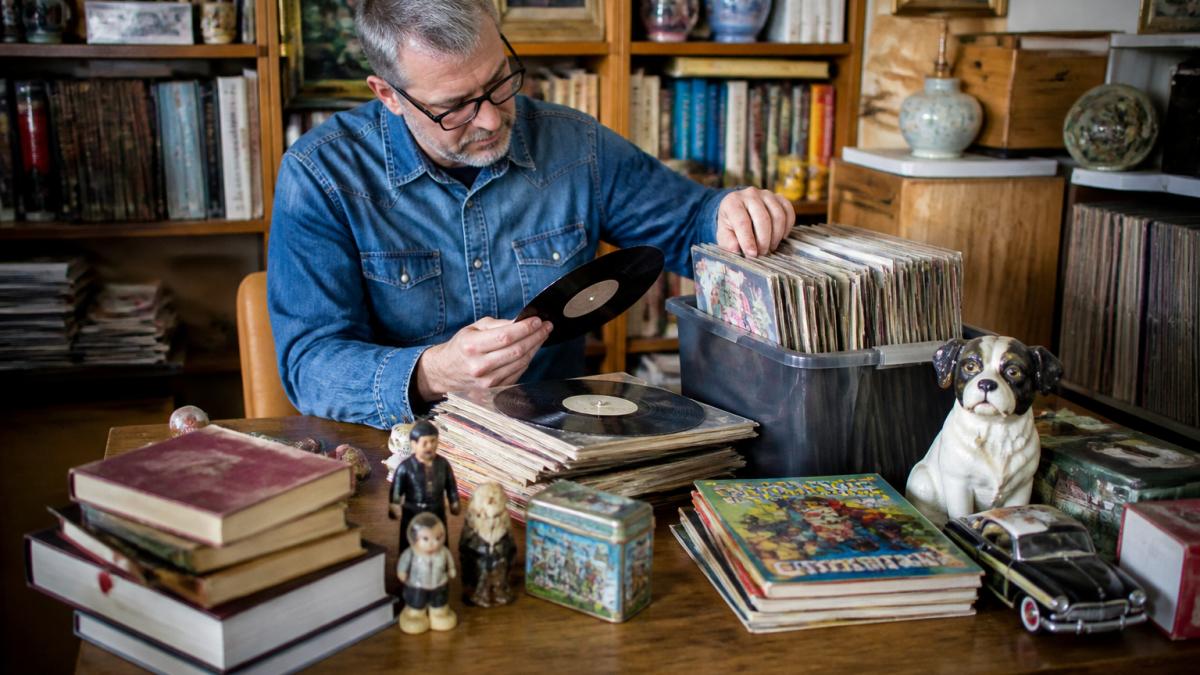
For books: check for water damage, torn pages, and marked-up text; dust jackets add significant value. For vinyl: clean gently and check for scratches or warping; original sleeves increase value. For memorabilia: assess for cracks or fading; original packaging boosts appeal. Document with clear photographs showing front, back, and flaws.
How to Sell a Collection: A Step-by-Step Workflow
Selling a full collection requires organization. Follow this process to maximize results.
Step 1: Sort, Catalog, and Research Your Collection
Sort items into categories by type. Create a spreadsheet listing each item, condition, and estimated value. Research comparable sales for representative items in each category to establish a baseline.
Step 2: Choose Your Sales Channel
Choose your channel based on collection size and timeline. Selling 50 vinyl records? Try a vintage fair or consignment shop. A 500+ book collection? Estate sale or direct dealer. A few high-value items? Direct sales to collectors. Estate sales take weeks; antique malls require ongoing restocking; direct sales close fastest.
Step 3: Present Items Professionally
Clean items thoroughly and arrange displays attractively. For online listings, include condition, dimensions, flaws, and original packaging. Use good photos. For in-person sales, organize by category, price clearly, and be ready to answer questions.
Step 4: Negotiate and Close the Sale Safely
Know your minimum acceptable price before negotiating with dealers. Meet in public spaces for cash transactions and bring a friend for high-value sales. Get a written agreement documenting what was sold and the agreed price.
Maximize Your Net Proceeds: Understanding Fees and Commissions
Fees and commissions vary dramatically by channel. Understanding them helps you compare options fairly, but the headline price is not what you keep. You must calculate your actual take-home amount after all costs.
Common Fee Structures by Channel
Antique mall booths: 30-50% commission plus $50-150 monthly rental. Consignment shops: 40-60% commission, payment in 30-90 days. Estate sale companies: 25-35% commission plus $200-500 in fees; net take-home often 50-60%. Vintage fairs: $25-100 booth rental, you keep 100% of sales. Direct sales to dealers: No commission; dealers offer 50-70% of retail value, paid immediately. Online marketplaces: No fees; you handle all communication and logistics.
Calculate Your Net Proceeds for Each Option
The channel with the highest gross price is not always the best choice. You must compare what you actually receive.
Example 1: A $200 vintage record player
- Antique mall: $200 sale, 40% commission, $75/month rental = $5 net (month one) or −$145 (month three).
- Consignment shop: $200 sale, 50% commission = $100 net.
- Vintage fair: $200 sale, $50 booth rental = $150 net.
- Direct sale to dealer: $140 offered = $140 net immediately.
The vintage fair yields the highest net ($150).
Example 2: A collection of 100 paperback books, estimated total value $300
- Consignment shop: $300 sale, 50% commission = $150 net.
- Vintage fair: $300 sale, $50 booth rental = $250 net.
- Direct sale to dealer: $150 offered = $150 net immediately.
The vintage fair wins ($250), and direct sales tie with consignment but pay immediately.
Account for Hidden Costs and Payment Timing
Beyond commission, consider these factors:
Payment timing: Antique malls and consignment shops hold payment 30-90 days. For quick cash, choose direct sales or vintage fairs. Restocking and maintenance: Some shops charge cleaning or repair fees; ask upfront. Unsold item retrieval: Clarify whether you can retrieve items free or pay a restocking fee. Negotiation room: Dealer offers are often negotiable; push back respectfully for 5-10% movement. Bulk discounts: Dealers offer lower percentages for large collections.
Create a Simple Comparison Spreadsheet
Before committing to a channel, list each option and calculate net proceeds:
| Channel | Gross Price | Commission | Other Fees | Payment Timeline | Net Proceeds |
|---|---|---|---|---|---|
| Antique Mall | $200 | $80 (40%) | $75 booth/mo | 30-60 days | $45 (if 1 month) |
| Consignment | $200 | $100 (50%) | $0 | 60 days | $100 |
| Vintage Fair | $200 | $0 | $50 booth | Same day | $150 |
| Direct Dealer | $140 | $0 | $0 | Same day (cash) | $140 |
This simple exercise reveals which channel maximizes your take-home amount for your specific situation.
Key Takeaway
Always calculate what you’ll actually receive after all fees, commissions, and payment delays. The channel with the highest asking price often nets you less than a lower-priced alternative with lower fees. Compare net proceeds, not gross price.
Always calculate what you’ll actually receive after all fees, commissions, and payment delays. The channel with the highest asking price often nets you less than a lower-priced alternative with lower fees. Compare net proceeds, not gross price.
Document Provenance and Authenticity
Provenance, the history and origin of an item, increases value and buyer confidence. Documentation proves authenticity.
Gather any original receipts, certificates, or paperwork. Keep records of where items came from. If an item belonged to a notable person or has an interesting history, document it.
For valuable collectibles, consider professional authentication. Graded vinyl records and authenticated signed books command premium prices. The cost of authentication (typically $10-50 per item) pays for itself on high-value pieces.
Take photographs showing condition clearly. For books, include title pages and copyright information. For vinyl, photo the label and sleeve. This documentation reassures buyers and supports your asking price.
Common Mistakes to Avoid When Selling Locally
Many sellers leave money on the table by making preventable errors.
Overpricing based on sentiment. Your grandfather’s record collection has emotional value to you, not to buyers.
Ignoring condition. A $50 record in poor condition might sell for $5. Be honest about wear, damage, and flaws.
Choosing the wrong channel. Selling 20 common paperbacks to an estate sale company wastes their time and your opportunity.
Poor presentation. Dusty items and blurry photos kill interest. Clean, photograph well, and write clear descriptions.
Unrealistic expectations about speed. Selling a collection takes time. Antique malls may hold items for months.
Skipping negotiation preparation. Know your bottom line before talking to dealers. Unprepared sellers accept lowball offers.
Mixing high-value and low-value items in one sale. Serious collectors want specialized inventory.
Selling vintage collectibles locally doesn’t require expertise.
Frequently Asked Questions
How do I find out what my vintage collectibles are worth?
Research comparable sales on eBay, Discogs, and ViaLib to see what similar items sold for recently. Check auction house results for rare pieces. Look at condition carefully, damage significantly lowers value. For books, check first-edition status and print run. For records, verify pressing and sleeve condition. Local dealers can provide free appraisals. Document any provenance or authentication certificates, as these increase value. Cross-reference multiple sources to get a realistic range, then price 10-15% below market to sell faster locally.
What’s the difference between selling vintage collectibles to a shop versus directly to a buyer?
Selling to a local shop (antique mall, consignment store, or dealer) is faster and hassle-free, they handle pricing and sales. You receive a lump sum or consignment split, typically 40-60% of sale price. Selling directly to individual collectors takes more time but nets you higher proceeds since there’s no middleman commission. Direct sales require you to vet buyers, handle negotiations, and manage payment safety. Choose shop sales for convenience and bulk collections; choose direct sales for rare, high-value items where collector interest justifies the extra effort.
How should I prepare vintage items before selling them locally?
Clean gently without damaging original condition, dust vinyl with a soft brush, wipe book covers with a dry cloth. Document any flaws honestly: scratches, wear, loose pages, or missing components. Take clear photos from multiple angles. Write detailed descriptions including edition, printing, pressing number, and condition. For books, note if pages are yellowed or marked. For records, mention any surface noise or skips. Keep all original packaging, inserts, or certificates of authenticity. Group similar items logically. This transparency builds buyer trust and justifies your asking price.
Is it better to sell vintage collectibles individually or as a collection?
Sell high-value, rare items individually to maximize proceeds, collectors pay premiums for specific pieces they seek. Bundle common or lower-value items as lots to save time and reduce transaction costs. Mixed collections (books with records, for example) typically sell better as bundles to dealers than individually. Consider your timeline: individual sales take longer but yield more total money; bulk sales are faster but may net less per item. For truly valuable collections, splitting into tiers works best: premium items sold separately, mid-range items bundled by type, common items sold as job lots.