

Sub-Total: $0.00
Selling Used Books for Store Credit: A 2026 Guide
Table of Contents
- Why Selling Used Books for Store Credit Beats a Cash Payout
- How a Bookstore Trade-In Policy Actually Works
- How to Prepare Books for Resale So You Get the Best Offer
- Selling Used Media for Store Credit: Books, Vinyl, Games, and More
- Store Credit vs. Cash: Which Payout Method Puts More in Your Pocket?
- The Tax and Sustainability Angles Most Sellers Overlook
- Maximizing Resale Value: Insider Tips for Your Next Trade-In
- Frequently Asked Questions
Last Updated: October 4, 2026
Why Selling Used Books for Store Credit Beats a Cash Payout
Selling used books for store credit usually puts more value in your pocket than a cash payout.
Here’s the logic. A store can pay you more in credit than in cash because that credit comes back to the shop as a future sale.
Below, we’ll show you exactly how to prepare your books, what gets accepted, and how to compare payout methods so you stop leaving value on the counter.
Key Takeaway
Store credit usually beats cash for the same stack because the shop can offer more when the money stays in the store. If you’re a regular reader, take the credit.
Store credit usually beats cash for the same stack because the shop can offer more when the money stays in the store. If you’re a regular reader, take the credit.
How a Bookstore Trade-In Policy Actually Works
A bookstore trade-in policy is the set of rules a shop uses to decide which books it will buy, how much it will pay, and whether you get cash or store credit.
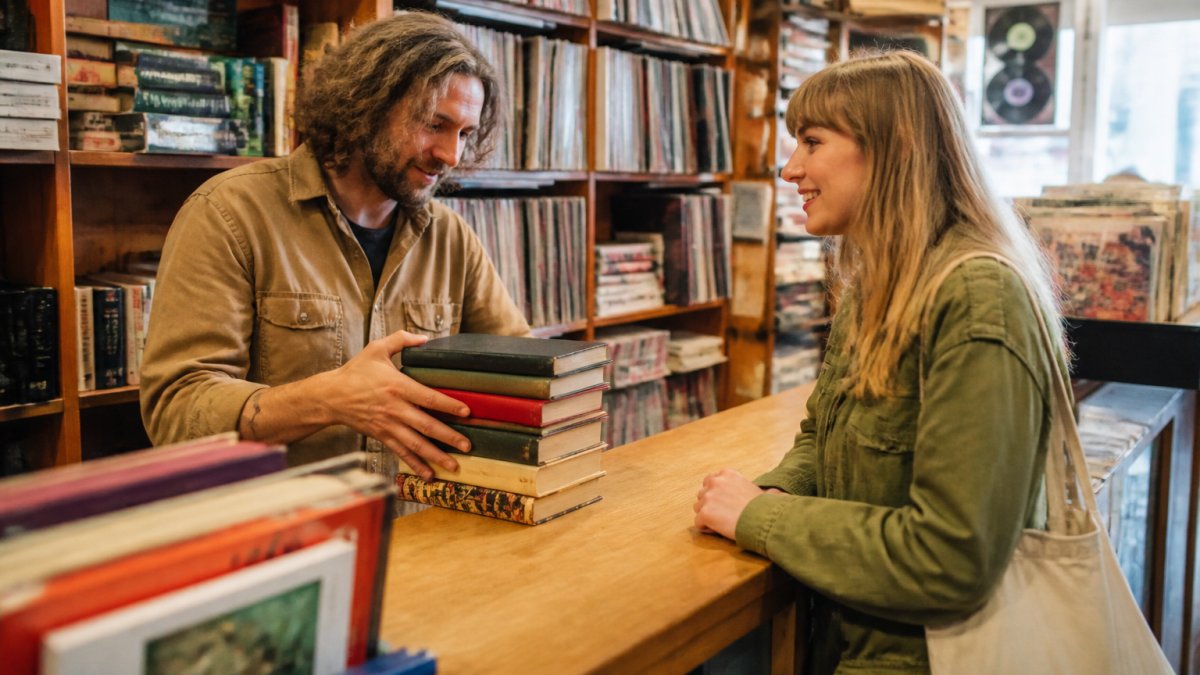
What Happens When You Bring in Your Books
The clerk reviews your stack, checks condition, and scans or looks up each ISBN. Then they make an offer. You can accept it, take back what they pass on, or ask for a second look on anything borderline.
A few mechanics worth knowing before you walk in:
- The scan is the first filter. If the ISBN doesn’t pull up a current demand signal in the shop’s system, the book is usually passed on regardless of condition. Popular backlist titles, recent bestsellers, and assigned classroom reading tend to clear this filter; mass-market paperbacks from decades ago often don’t.
- The offer is per-item, not per-box. You’ll typically get a line-by-line quote, which means you can decline individual items and keep the rest of the trade intact.
- Credit is quoted at a higher rate than cash on the same item. A common pattern is that the credit offer runs meaningfully higher than the cash offer for the identical book, because the shop expects that credit to come back as a future sale.
- Quotes are usually good for that visit. If you walk out without accepting, you’ll generally need a fresh quote next time.
Condition Grading: What Gets Accepted and What Doesn’t
Condition grading is the process of sorting books by how well they’ve held up. Most shops accept a range of conditions, but the offer changes with the grade.
| Grade | What It Looks Like | Typical Outcome |
|---|---|---|
| Like new | No marks, tight spine, crisp pages | Best offer |
| Good | Light wear, clean pages, solid binding | Standard offer |
| Fair | Creased spine, some yellowing, all pages intact | Lower offer or pass |
| Poor | Water damage, torn pages, broken spine, odors | Usually declined |
A common mistake is hauling in boxes without checking condition first. A quick sort at home saves you the trip and the disappointment.
Self-Grading Rubric Before You Go
You can grade your own books in about a minute each with a simple rubric. Check these five points in order:
- Spine, Open the book to the middle. If the spine cracks or the pages fan loose, it’s Fair at best.
- Pages, Flip through for writing, highlighting, dog-ears, or stains. Heavy marking drops a grade.
- Cover, Look for creases, sun fading, or peeling laminate. A clean cover can lift a book a full grade.
- Smell, Musty, smoky, or mildewed books are almost always declined, no matter how clean the pages look.
- Extras, Dust jackets, inserts, and any included media (CDs, maps) raise value; missing pieces lower it.
If a book fails two or more of these checks, leave it home. Bringing in a stack of obvious passes slows down your trade and can make the clerk skim the good stuff too.
Pro Tip
Photograph your stack before you go. If a shop passes on an item you believe is valuable, a quick photo of the ISBN and copyright page lets you check it against an online sold-listing search later.
Photograph your stack before you go. If a shop passes on an item you believe is valuable, a quick photo of the ISBN and copyright page lets you check it against an online sold-listing search later.
How to Prepare Books for Resale So You Get the Best Offer
Prepping your books before you go is the single easiest way to raise your offer. It takes an afternoon and costs nothing.
Cleaning, Sorting, and Checking ISBNs Before You Go
- Wipe covers with a dry or barely damp cloth
- Erase pencil marks and remove stickers where you can
- Pull out anything with water damage, mold, or a broken spine
- Group by category so the clerk can move faster
- Check the ISBN on the back cover to confirm the edition
The ISBN lookup matters more than people think. A book club edition or a later printing is worth less than a first edition, even with the same title.
Pro Tip
Bring your books in a box or bag you don’t need back. Shops often can’t return your container once items are sorted into their system, and a reusable tote makes the whole exchange smoother.
Bring your books in a box or bag you don’t need back. Shops often can’t return your container once items are sorted into their system, and a reusable tote makes the whole exchange smoother.
Selling Used Media for Store Credit: Books, Vinyl, Games, and More
Selling used media for store credit isn’t limited to books. Many shops take vinyl records, movies, games, and collectible figures in the same visit.
That’s the part most guides miss.
A few things to know:
- Vinyl is graded on the record and the sleeve separately
- Games need the case and artwork to get the best value
- Movies are usually the lowest-value category, so bring them along but don’t expect much
- Figures and collectibles get looked at case by case
If you’re in the Tupelo area and want to trade in pre-loved books, games, and media, Greatest Hits Music & Books takes store credit across all of it in one stop.
Store Credit vs. Cash: Which Payout Method Puts More in Your Pocket?
Store credit typically pays more than cash for the same items. Cash pays less because the shop takes on the risk of reselling and needs its margin up front. Credit lets them share more of that value back with you.
Here’s the honest math:
| Factor | Store Credit | Cash |
|---|---|---|
| Offer size | Higher | Lower |
| Best for | Regular readers and collectors | Sellers who want money now |
| Flexibility | Spends in-store only | Spends anywhere |
| Effort | Same | Same |
The Credit-to-Cash Ratio, Explained
Most shops don’t publish a ratio, but the pattern is consistent: credit offers run a meaningful percentage above cash offers on the same stack.
Run the break-even yourself before you decide:
- If you’ll spend the credit within a few months on books, records, or games you’d have bought anyway, credit wins, you’re effectively getting a discount on your next purchase.
- If you won’t be back, or you need the money for something outside the shop, cash wins even at the lower number.
- If the shop runs a trade-in promotion (bonus credit on certain categories), the ratio can swing further toward credit. Ask at the counter.
The one drawback of credit: it locks your value into one shop. That’s fine if you like the shop. It’s a problem if you don’t.
Is Store Credit Taxable? What Most Guides Skip
The tax treatment of a trade-in is one of the least-covered parts of this topic, and it’s worth understanding before you assume either way.
The general rule from the IRS on hobby vs. business income is that income from selling personal items can be taxable in some situations. For most casual sellers cleaning out a shelf, selling personal books at a loss isn’t a concern, you generally can’t deduct a loss on personal property, and the amounts are small. But two situations change the picture:
- You’re buying to resell. If you source books specifically to trade them in for profit, that’s business income. Keep records of what you paid and what you received, including credit.
- You’re receiving credit instead of cash. Store credit is still value received. If the activity rises to the level of a business, the credit’s fair market value counts as income just like cash would.
For most readers trading in a shelf or two a year, this is a non-issue. If you’re running a side hustle, treat the trade-in like any other sale and keep a simple log.
Watch Out
Don’t assume a trade-in is tax-free just because it’s a hobby. If you’re selling regularly for profit, the rules change. Check with a tax professional rather than guessing.
Don’t assume a trade-in is tax-free just because it’s a hobby. If you’re selling regularly for profit, the rules change. Check with a tax professional rather than guessing.
A Quick Decision Framework
Before you hand over the stack, ask three questions:
- Will I spend this credit in the next few months? If yes, take the credit.
- Is the shop running a bonus-credit promotion right now? If yes, the credit offer gets even stronger.
- Do I need the money outside this shop? If yes, take the cash and accept the lower number.
That’s the whole decision. The ratio does the rest of the work for you.
The Tax and Sustainability Angles Most Sellers Overlook
Two things rarely come up when people talk about selling used books, and both are worth a minute of your time.
On taxes, the general rule from the IRS on hobby vs. business income is that income from selling personal items can be taxable in some situations.
On sustainability, every book you trade in stays in circulation instead of hitting a landfill. The EPA’s guidance on reducing waste notes that reusing items keeps them out of the waste stream longer than recycling alone.
Maximizing Resale Value: Insider Tips for Your Next Trade-In
Getting the most from your next trade-in comes down to timing, sorting, and knowing what shops actually want.
- Sort before you go. Clean, grouped books get processed faster and often get a better look.
- Bring it all at once. Bundling books, records, and games into one visit saves time and can raise the total offer.
- Know your high-value items. First editions, out-of-print titles, and rare vinyl deserve a mention at the counter.
- Ask about credit bonuses. Many shops run trade-in promotions that boost your credit on certain categories.
- Skip the damaged stuff. Mold, water damage, and strong odors get declined. Leave them home.
The real difference between a so-so offer and a great one is preparation. Ten minutes of sorting beats an hour of haggling.
If you’re weighing where to take your collection, look for a shop that handles the whole range. For anyone hunting rare vinyl and out-of-print books, our mix of vintage finds and new releases is worth the browse. American Booksellers Association on the used book market tracks how independent shops keep second-hand media moving through local communities.
Best For
Readers and collectors who plan to buy more books, records, or games within a few months. Store credit stretches further than cash for regulars.
Readers and collectors who plan to buy more books, records, or games within a few months. Store credit stretches further than cash for regulars.
Clearing out a collection shouldn’t feel like a gamble on whether you’ll get a fair offer. You get a huge selection of books, records, movies, games, and nostalgic finds, plus a one-of-a-kind mix of treasures and new releases to spend your credit on. Bring your stack to our Tupelo shop and turn a shelf of old favorites into your next great find.
Frequently Asked Questions
Is it better to take cash or store credit for used books?
Store credit almost always stretches further. Most bookstores offer a higher trade-in value in credit than in cash because credit keeps you shopping in the store. If you plan to buy more books, vinyl, or games anyway, the credit route typically nets you more total value. Take cash only when you have no interest in browsing the shelves again.
What condition do my books need to be in for trade-in?
Books generally need intact pages, a readable spine, and a cover that isn’t falling apart. Water damage, heavy highlighting, missing pages, and strong odors usually disqualify a book. A few creases or a former owner’s name inside the cover are usually fine. Clean, dry, smoke-free books get the best offers.
Can I trade in other media like vinyl or games for store credit?
Yes. Many independent bookstores, including Greatest Hits Music & Books, accept vinyl records, CDs, DVDs, video games, and collectible figures alongside books. Vinyl and games often carry strong resale value, so bring them in the same trip. Scratched discs and warped records are usually turned down, so check condition first.
How do bookstores determine the value of used books?
Staff look at condition, current demand, and whether the title is already stocked. A clean, in-demand paperback or a rare first edition earns more than a shelf-worn bestseller the store already has ten copies of. An ISBN lookup helps confirm the edition and market price. Bring a mix of titles rather than one genre to improve your odds.