

Sub-Total: $0.00
Is Selling Books to Online Stores Worth It? A 2026 Review
Table of Contents
- The Real Math Behind Selling Books Online
- Best Websites to Sell Used Books
- How Much Can You Make Selling Used Books Online?
- How to Price Used Books So They Actually Sell
- Selling Books Online vs. Bookstore: Which Pays More?
- The Hidden Costs and Hassles of Online Buyback
- When Selling Books Online Is Worth It (and When It Isn’t)
- Frequently Asked Questions
Last Updated: October 18, 2026
The Real Math Behind Selling Books Online
Is selling books to online stores worth it? For most casual sellers, no. The buyback sites that dominate search results pay a fraction of what a book is worth, and the gap between what you expect and what you get is where most people walk away disappointed. This guide from Greatest Hits Music & Books breaks down the actual math, the real costs, and the cases where shipping a box off to a buyback site genuinely beats every alternative.
Here is the core tension: online buyback services are built for volume, not for you. They quote per book, subtract shipping, and pay out only after inspection. A book you paid $18 for might fetch a couple of dollars. That is not a scam. It is a business model that assumes you want the box gone more than you want the money.
Below, we compare the major buyback comparison tools, explain how pricing actually works, and show you when selling online is worth the effort, and when walking into a store with your box is the smarter move.
Best Websites to Sell Used Books
The best websites to sell used books fall into two categories: comparison tools that check multiple buyers at once, and individual buyback services that make offers directly. Comparison tools are the smarter starting point because they save you from accepting the first low offer you see.
BookScouter compares buyback prices across participating buyers. Its main strength is that it lets you check alternatives before committing, and its guide specifically covers textbook buyback. The limitation is real: the comparison shows you offers, but it does not tell you how each buyer handles shipping, fees, or final payout terms. You still have to read the fine print on the buyer’s own site.
Bonavendi takes a similar approach and, per its own description, checks more than a dozen buyers including BooksRun, Ziffit, and Cash4Books. The comparison is free and instant, which makes it a low-effort first step. What it does not do is verify the terms behind each offer, so the number you see is only as reliable as the buyer behind it.
BooksRun and Ziffit are individual buyers you will encounter in those comparisons. Both make offers on used books, and both are worth checking, but neither publishes straightforward payout terms in the comparison results. Treat any offer from either as a starting point, not a final number.
| Service | What It Does | Best For | Watch Out For |
|---|---|---|---|
| BookScouter | Compares buyback offers | Checking alternatives fast | No fee or payout detail |
| Bonavendi | Compares 12+ buyers, free | One-stop offer scanning | Unverified buyer terms |
| BooksRun | Direct buyback offers | Textbook sellers | Offer amounts unclear upfront |
| Ziffit | Direct buyback offers | Bulk clearance | Shipping and payout terms vary |
Pro Tip
Scan your ISBNs through two comparison tools before accepting anything. The same book can carry noticeably different offers across buyers, and the difference is often enough to justify the extra ten minutes.
Scan your ISBNs through two comparison tools before accepting anything. The same book can carry noticeably different offers across buyers, and the difference is often enough to justify the extra ten minutes.
How Much Can You Make Selling Used Books Online?
Realistically, most sellers make modest money per book through online buyback, and the total depends far more on what you are selling than on which site you choose. Common paperbacks and old bestsellers fetch very little because buyers already hold too much inventory. Textbooks, recent editions, and genuinely scarce titles are where the offers climb.
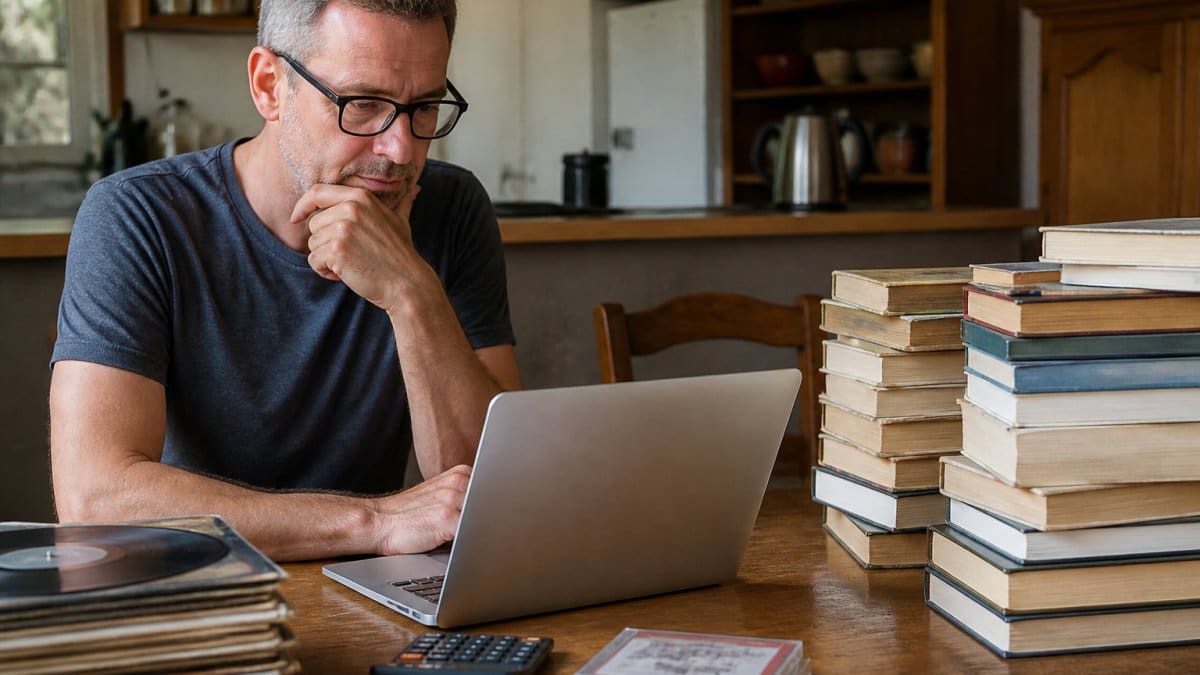
The math that matters is not the per-book offer. It is the per-box return after you subtract shipping, packaging, and your own time. A box of twenty ordinary novels might net a small amount once shipping comes out, which works out to very little per hour of sorting and packing. A single sought-after textbook in good condition can beat that entire box.
This is why serious sellers sort first. Pull the textbooks, the recent editions, the niche nonfiction, and anything in demand. Move the rest through a different channel or donate it. Shipping a box of low-value books to a buyback site is the most common way people conclude that selling books online is not worth it, when the real problem was the inventory they chose to ship.
How to Price Used Books So They Actually Sell
Pricing used books well means matching the price to the book’s actual demand, not to what you paid or what it cost new. A book is worth what a buyer will pay today, and that number is set by condition, edition, and how many copies are already listed.
Start with the ISBN and check completed sales, not asking prices. Asking prices tell you what sellers hope to get. Completed sales tell you what buyers actually paid. If a title has dozens of listings and no recent sales, the market is telling you something.
Condition drives the rest. A clean copy with an intact spine and no highlighting supports a higher price. Ex-library stamps, water damage, and loose pages push a book toward the bargain bin. Be honest in your grading, because a returned item costs you shipping both ways.
- Check completed sales first. Ignore asking prices.
- Grade condition honestly. Note highlighting, stamps, and spine wear.
- Compare listing volume. Heavy supply means lower prices.
- Bundle series and sets. Complete runs sell better together.
- Price to move, not to dream. A book that sits unsold is worth nothing.
Watch Out
The most common pricing mistake is anchoring to the original cover price. Buyers do not care what the book cost new. Price against current demand and condition, or your listing will sit while identical copies undercut you.
The most common pricing mistake is anchoring to the original cover price. Buyers do not care what the book cost new. Price against current demand and condition, or your listing will sit while identical copies undercut you.
Selling Books Online vs. Bookstore: Which Pays More?
A local bookstore buyback usually pays more per book than an online buyback site, and it pays immediately, with no shipping and no waiting for inspection. That is the honest comparison, and it is not close for the average seller.
Online buyback wins on convenience and reach. You can sell from your couch, and you are not limited to what one store wants. But that convenience is priced in: the site has to cover shipping, processing, and its own margin, and all of that comes out of your payout.
A store buyback, the kind Greatest Hits Music & Books runs, works differently. We pay cash for books and offer store credit for books, music, movies, games, and figures. You get a decision in person, you keep the books you decide not to sell, and there is no box to pack or label to print. For anyone within driving distance, that is usually the better deal on both money and time.
Where online still wins: rare titles that no local store has a buyer for, and sellers in remote areas with no buyback store nearby. If that is you, a comparison tool is your friend.
The Hidden Costs and Hassles of Online Buyback
The sticker offer is not the payout. Online buyback carries costs that do not show up until after you have committed, and those costs are what turn a decent-looking offer into a disappointing one.
Shipping is the first. You pay to send the box, and heavy boxes of books are not cheap to ship. Some buyers cover shipping above a threshold, many do not, and the terms are buried in the fine print.
Inspection is the second. Offers are provisional until the buyer checks condition. A book graded lower than you expected means a reduced payout, and by then the books are already gone. You can decline and pay return shipping, which usually defeats the purpose.
Then there is the time cost. Sorting, scanning ISBNs, packing, printing labels, and tracking the payout all take hours. Spread across a box of low-value books, that time is worth very little per hour.
- Shipping costs come out of your payout
- Offers can drop after inspection
- Return shipping is on you if you decline
- Payouts can take weeks to arrive
- Time spent sorting and packing adds up fast
Key Takeaway
The number that matters is what lands in your account after shipping, inspection adjustments, and your own time, not the offer shown on screen.
The number that matters is what lands in your account after shipping, inspection adjustments, and your own time, not the offer shown on screen.
When Selling Books Online Is Worth It (and When It Isn’t)
Selling books online is worth it when you hold specific, in-demand titles and you are optimizing for reach rather than speed. It is not worth it when you have a mixed box of ordinary books and you want a fair price without the packing and waiting.
Use this checklist to decide:
- Do you have textbooks, recent editions, or scarce titles? Online buyback may pay well.
- Is the box mostly common paperbacks and old bestsellers? A local buyback is the better route.
- Are you within driving distance of a store that pays cash? Compare that offer before shipping anything.
- Do you have hours to sort, scan, and pack? If not, sell locally.
- Are you willing to accept a post-inspection price cut? If not, sell in person.
- Is the title rare enough that no local buyer will take it? Online reach helps here.
The pattern is clear once you run the checklist. High-value, hard-to-place books reward the online route. Everything else rewards a local buyback where you get a decision on the spot.
The real challenge with selling books online is that the offer on screen rarely matches what you actually collect after shipping, inspection, and hours of sorting. If you would rather skip the box, the label, and the wait, bring your books to Greatest Hits Music & Books. We pay cash for books and offer store credit for books, music, movies, games, and figures, so you get a fair decision in person and keep anything you decide not to sell. Get started with Greatest Hits Music & Books and turn that stack into cash or credit today.
Frequently Asked Questions
Is it worth selling used books online?
It depends on the book. Selling books online is worth it for textbooks, rare titles, and in-demand fiction that buyers compete for. For ordinary paperbacks and book club editions, online buyback offers often come in low after fees and shipping. Compare offers from at least two buyback sites, then check what a local bookstore would pay in cash or store credit before you box anything up.
How much can you make selling books online?
There is no single answer because payouts vary by title, condition, and demand. Most buyback sites quote per book after you enter the ISBN, and those quotes change as inventory levels shift. Textbooks and collectible editions tend to earn the most. Common mass-market paperbacks often earn very little. Use a comparison tool to check several offers at once, and treat any single quote as one data point, not the final word.
What is the best website to sell used books?
Comparison tools like BookScouter and Bonavendi are a good starting point because they show offers from multiple buyers, including BooksRun and Ziffit, in one search. That saves you from accepting the first quote you see. The best site for your stack depends on what you are selling: textbooks perform differently than vintage paperbacks. Run your ISBNs through a comparison tool, then weigh the top offer against a local bookstore’s cash or credit offer.
Is it better to sell books online or to a bookstore?
Online buyback makes sense for high-value titles and for sellers who do not mind shipping. A bookstore is often better for mixed stacks, heavy hardcovers, and anything you want to unload in one trip. Local stores pay cash or store credit on the spot, with no shipping labels or waiting for a quote to be approved. If your goal is speed and simplicity, walk in. If you have a few valuable titles, compare online offers first.
Where can I sell books for cash without shipping them?
Local bookstores and used-media shops that buy collections are the main option. Call ahead to confirm what they accept and whether they pay cash or store credit. Bring your books in person so the buyer can check condition, and ask how they price mixed stacks. Stores that also sell records, movies, and games often take a broader range of media, which means fewer trips and less sorting at home.