

Sub-Total: $0.00
World of Books vs HPB: Which Buyback Pays More?
Last Updated: October 23, 2026
Quick Summary
The core difference in world of books vs hpb is where the sale happens: World of Books is a mail-in online buyer, while HPB runs an in-store buyback counter. World of Books pays after your shipped box passes inspection, while HPB typically pays cash or store credit the same visit.
- World of Books requires entering titles online, printing a label, and waiting for payment after inspection.
- HPB buyers decide on the spot, so declined items can be kept or rerouted immediately.
- HPB accepts books plus movies, music, and games, subject to store discretion.
- Mail-in offers are based on declared condition, and mismatches can reduce or void them.
- Compare net proceeds by subtracting shipping, travel, declined items, and your time from each offer.
Table of Contents
- World of Books vs HPB: The Core Difference
- Side-by-Side Comparison: Offers, Payment, and Effort
- Half Price Books Book Buyback: How the In-Store Process Works
- World of Books Sell Books: Mail-In Terms and What to Expect
- Where to Sell Used Books When Neither Offer Fits
- Cash for Used Books: Calculating Your Real Net Proceeds
- Which One Should You Pick?
- Frequently Asked Questions
World of Books vs HPB: The Core Difference
The core difference in any World of Books vs HPB comparison comes down to where the transaction happens: World of Books is a mail-in online buyer, while Half Price Books runs an in-store buyback counter.
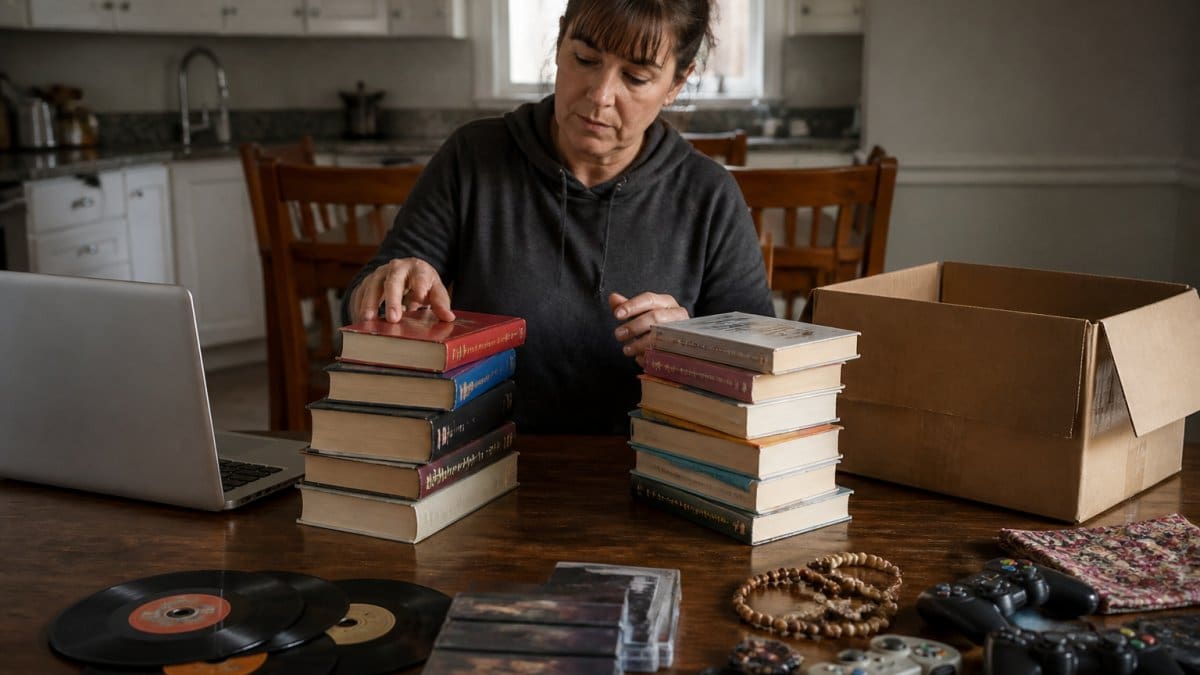
That distinction shapes everything else. With World of Books, you enter titles online, wait for an offer, print a label, and get paid after the box arrives and passes inspection.
Neither approach is automatically better. If you want to see how these two stack up against other buyback and buying options, our breakdown of World of Books vs alternatives covers the wider field.
Side-by-Side Comparison: Offers, Payment, and Effort
No single table can promise you a dollar figure, because both buyers price each title individually and change offers over time. What we can compare honestly is how each one works, what each one accepts, and what effort you’re signing up for before you commit.
| Factor | World of Books | HPB (Half Price Books) |
|---|---|---|
| Where you sell | By mail, from home | In person, at a store counter |
| How you get an offer | Enter titles online, receive an offer | Buyer inspects items on the spot |
| Payment options | Payment per their terms after processing | Cash or store credit, typically same visit |
| What’s accepted | Books, subject to their current buying criteria | Books plus movies, music, and games, subject to store discretion |
| Format standards | Generally ISBN-based; confirm edition and binding match the listing | Buyer checks disc, case, and insert condition for media; binding and pages for books |
| Condition bar | Declared condition drives the offer; mismatches can reduce or void it | Buyer sets the bar on site; heavily worn, marked, or incomplete items are commonly declined |
| UPC/barcode | Usually matched by ISBN or listed identifier | Store may scan UPC or ISBN to check demand and existing stock |
| Effort | Sorting, packing, shipping, waiting | Hauling boxes, travel, queueing |
| Best for | Large lots you don’t want to carry | Fast answers and same-day money |
A practical eligibility checklist works for both buyers:
- Books: intact binding, no mold or water damage, no missing pages, and a legible ISBN. Ex-library stamps and remainder marks usually lower an offer rather than disqualify it.
- DVDs and Blu-rays: playable disc with no deep scratches, original case, and cover art. Missing inserts or generic cases often reduce value.
- Games and music: disc or cartridge in working condition, case and manual where applicable, and a scannable UPC.
- Sets and boxed sets: complete, with all discs or volumes present. Incomplete sets are frequently declined.
If store credit is on your radar, our guide to selling used books for store credit walks through how credit usually compares to a cash offer.
Pro Tip
Photograph the ISBN or UPC page and the disc surface before you ship or drive. If an offer is revised downward, you have a record of what you sent.
Photograph the ISBN or UPC page and the disc surface before you ship or drive. If an offer is revised downward, you have a record of what you sent.
Half Price Books Book Buyback: How the In-Store Process Works
The Half Price Books book buyback is a walk-in process: you bring your books to the counter, a buyer reviews them, and you leave with an offer of cash or store credit. There’s no online quote stage and no shipping label.
Here’s how it typically runs:
- Sort your books before you go. Pull out anything water-damaged, moldy, or missing pages.
- Bring them in during normal hours and tell the counter you’re selling.
- A buyer reviews condition, demand, and current store inventory.
- You get an offer, usually as cash or store credit, and decide on the spot.
The catch most sellers learn the hard way: a store buys for its own shelves, not for the open market. A clean, popular title can still be declined if the location already has three copies. Expect to carry some books back home.
If the drive or the queue doesn’t appeal, our list of online alternatives to HPB covers options that don’t require a store visit.
World of Books Sell Books: Mail-In Terms and What to Expect
The World of Books sell books route is a mail-in sale: you submit your titles, accept an offer, ship the books, and get paid once they’re received and checked. The convenience is real, and so is the waiting.
A few things to plan around:
- Submit accurately. Enter the correct edition, format, and condition. Offers are based on what you declare, and mismatches can lead to a revised or rejected offer.
- Pack properly. Padded boxes, no loose discs or torn covers shifting in transit.
- Read the terms before you ship. Confirm who pays postage and what happens if items are declined.
- Expect a processing window. Payment lands after inspection, not when you drop the box off.
One insider note: mail-in buyers price against resale, so common mass-market paperbacks often come back with low or no offer. The economics favor titles with steady demand.
Where to Sell Used Books When Neither Offer Fits
Sometimes the offer is too low, or the store declines the box entirely. That’s not a dead end. A local shop that buys across books, music, movies, and games gives you a second opinion in person, and you can ask what they’re short on before you haul anything in.
Independent stores also tend to be more flexible on quirky inventory: vintage paperbacks, out-of-print editions, boxed sets, and media a chain buyer might pass on. If your goal is cash rather than credit, our guide to selling used books for cash near you covers how to find and vet local buyers.
Pro Tip
Call ahead and ask what the buyer is currently short on. A two-minute call can save you from hauling three boxes of romance novels to a store that’s fully stocked.
Call ahead and ask what the buyer is currently short on. A two-minute call can save you from hauling three boxes of romance novels to a store that’s fully stocked.
Cash for Used Books: Calculating Your Real Net Proceeds
The offer isn’t your profit. Subtract the costs of getting the books there, and the gap between a mail-in quote and an in-store offer can shrink or flip. Most guides stop at listing options; the useful move is to run both paths through the same net-proceeds formula before you choose.
Use this worksheet for each path:
- Gross offer. The number the buyer quotes or hands you.
- Less shipping and packing. For mail-in, subtract postage, the box, padding, and any label or handling fee. For in-store, this line is zero.
- Less travel. For in-store, subtract fuel and parking, or transit fare. For mail-in, this line is zero.
- Less declined items. Multiply the share of your lot you expect to be rejected by the value of those items. Declined items pay nothing on either path and may cost you return shipping on mail-in.
- Less your time. Packing and shipping a box is commonly an hour or more; a store trip includes drive and queue time. Value it at whatever your hour is worth to you.
- Net proceeds. Gross offer minus lines 2 through 5.
A worked pattern most sellers recognize: a mail-in quote that looks higher on paper can net less than a slightly lower in-store offer once postage and packing come out, especially on small lots where shipping is a fixed cost spread over few books.
Two adjustments that change the math:
- Store credit vs. cash. Credit is only worth face value if you’ll actually spend it. If you wouldn’t buy anything at that store, treat the credit offer as a discount, not a payment.
- Declined-item risk. Mail-in buyers inspect after the box arrives, so a revised offer can arrive after you’ve already paid to ship. In-store buyers decide in front of you, which lets you keep or reroute declined items on the spot.
Run the worksheet twice, once per path, using conservative offer estimates. Our review of whether selling books to online stores is worth it digs into that math in more detail.
Key Takeaway
The comparison that matters isn’t the quoted offer. It’s the quoted offer minus shipping, travel, declined items, and your time. Calculate both paths before you commit a single box.
The comparison that matters isn’t the quoted offer. It’s the quoted offer minus shipping, travel, declined items, and your time. Calculate both paths before you commit a single box.
Which One Should You Pick?
Pick World of Books if you have a manageable lot, don’t mind shipping, and want to avoid a trip. Pick HPB if you want a same-day answer, cash in hand, and the chance to walk out with credit toward your next read.
Here’s the split we’d actually recommend:
- Small lot, busy week: mail-in, if the offer clears your shipping cost.
- Large lot, mixed media: in-store, where a buyer can price books, movies, and games together.
- Rare or vintage titles: a local independent buyer who values the unusual stuff.
- Unsure: get a mail-in quote first, then use it as your floor when you walk into a store.
At Greatest Hits Music & Books, we buy books for cash and offer store credit across books, music, movies, games, and figures. Bring in what the online buyers lowballed and ask us to take a look.
Frequently Asked Questions
Does World of Books pay cash for books?
World of Books is listed as a buyer in third-party book buyback comparison tools, but the terms it offers are not verified in current public data. Before you commit a box of books, run a few ISBNs through a comparison service and read the payout terms carefully. Payouts from online buyers are typically quoted per accepted item, and shipping costs come out of your end unless the buyer covers postage. Confirm whether you are being offered cash or credit, and check the deadline for accepting an offer.
Does Half Price Books buy used books, and how does it decide?
Half Price Books buys used books at its stores, and staff evaluate items in person rather than by barcode alone. Condition matters: clean, unmarked copies with intact spines move faster than damaged or ex-library copies. Demand matters too, so recent bestsellers, popular genre fiction, and children’s titles tend to get offers while outdated reference material often does not. You can choose cash or store credit, and store credit is usually the higher figure. Bring a photo ID, since buyback transactions generally require one.
Is it better to sell books online or to a local bookstore?
It depends on volume and how much your time is worth. Online buyback services suit large batches and let you compare offers from more than 30 vendors in one search, which is useful when you have no idea what a title is worth. A local store wins on speed and certainty: you get a decision the same day, no packing, no postage, and no waiting for an offer to be re-graded on arrival. If you have a modest stack and want cash today, in-person is usually the simpler path.
What kinds of used books are worth selling?
Titles with active demand sell best: recent bestsellers, popular series, cookbooks, children’s books, and niche nonfiction with a steady readership. First editions and out-of-print titles can carry real value to collectors, but condition decides most of it. Books with water damage, loose pages, heavy highlighting, or missing dust jackets usually get declined or priced very low. Textbooks are hit or miss because editions age fast. Check the ISBN and copyright page before hauling a box anywhere.
Where can I donate unwanted books if a store declines them?
Libraries, school districts, senior centers, and prison literacy programs accept donations, though many have limits on volume and condition. Goodwill and similar thrift organizations take books at most locations, and Friends of the Library groups often run ongoing book sales. Call ahead before you load the car, since acceptance policies vary by branch and season. Books nobody will buy still have readers, so donation is a reasonable fallback rather than a failure.
The real challenge isn’t finding a buyer; it’s finding one that pays fairly for the books a big online service dismisses. Greatest Hits Music & Books buys books for cash and offers store credit on books, music, movies, games, and figures, all under one roof alongside a curated mix of vintage finds and new releases. Get started with Greatest Hits Music & Books and turn the boxes in your garage into cash or your next favorite treasure.
