

Sub-Total: $0.00
Buying Rare Vinyl Online vs Locally: A 2026 Guide
Table of Contents
- Online vs. Local Record Shopping: The Core Trade-Offs
- The Real Cost of Rare Vinyl: Online vs. In-Store Price Comparison
- How to Grade Vinyl Records Before You Pay
- Rare Vinyl Record Price Guide: Reading Market Value Before You Buy
- Best Online Record Stores for Rare Vinyl
- Finding Vinyl Record Stores Near Me: A Local Search Strategy
- Authenticity, Counterfeits, and Edition Verification
- Returns, Shipping Damage, and Dispute Resolution
- Frequently Asked Questions
Last Updated: October 21, 2026
Online vs. Local Record Shopping: The Core Trade-Offs
Buying rare vinyl online vs locally comes down to a simple split: online gives you reach, local gives you proof. At Greatest Hits Music & Books, we watch collectors weigh that trade-off daily, and neither channel wins outright.
That distinction matters more for rare vinyl than new pressings: a common reissue is a commodity, while a first pressing’s value lives entirely in its condition and authenticity.
What Each Channel Does Better
Online wins on selection and specificity. If you need one exact pressing, a marketplace listing is often the only path to it.
Local wins on inspection and immediacy. You see the seams, the label, the spindle marks, and you walk out with the record in hand.
| Factor | Online | Local |
|---|---|---|
| Selection | Huge, global | Limited to stock |
| Condition check | Photos and grades | Hands-on |
| Total cost | Price plus shipping and tax | Price plus tax |
| Risk | Shipping damage, misgrading | Lower, you inspect |
| Speed | Days to ship | Same day |
The Real Cost of Rare Vinyl: Online vs. In-Store Price Comparison
The listing price is not the price you pay online. Shipping, sales tax, and marketplace fees stack on top, and on a single rare record those extras can swing the total past what a local shop charges for a comparable copy. A local purchase adds sales tax and nothing else.
A Repeatable Total-Cost Framework
Most collectors compare sticker prices and stop there. Build a landed-cost worksheet for every serious rare purchase instead, so you compare like with like.
Online landed cost = item price + shipping + shipping insurance (if any) + sales tax collected at checkout + payment or platform fees passed to you + expected packing-risk cost.
Local landed cost = sticker price + sales tax + travel cost (fuel, parking, transit fare) + your time.
The last term in each line is the one collectors forget.
Worked Example: Same Record, Two Channels
Suppose a rare pressing lists online at $120 and a local shop has a comparable copy at $135. The online listing looks cheaper until you total it:
- Item price: $120
- Shipping with tracking: $8
- Insurance on a record over $100: $3
That lands the online copy near $140 or more once tax is applied, before any packing-risk allowance. The local copy at $135 plus sales tax may come out within a few dollars, and you inspected it in person.
Run the same arithmetic in reverse: if the online copy were $95, the landed total might still beat the local price by enough to justify the shipping risk.
When the Online Premium Is Worth Paying
The landed-cost comparison is necessary but not sufficient. Pay the online premium when:
- The exact pressing you need does not exist in any local shop and may never surface there.
- The local copy is a different, less desirable edition, so you are not comparing equivalent objects.
- The seller’s feedback and return policy reduce packing risk to near zero.
Skip the online premium when the local copy is the same pressing in comparable grade, when the seller will not insure or pack properly, or when the listing has sat unsold for weeks, a sign the ask is above market.
Pro Tip
Keep a simple spreadsheet column for landed cost on every rare record you consider. After a dozen purchases you will have your own benchmark for what shipping and fees actually add in your region, and the online-versus-local decision becomes arithmetic instead of instinct.
Keep a simple spreadsheet column for landed cost on every rare record you consider. After a dozen purchases you will have your own benchmark for what shipping and fees actually add in your region, and the online-versus-local decision becomes arithmetic instead of instinct.
Fees and Taxes That Surprise Buyers
Two cost lines trip up online buyers most often. First, most major marketplaces collect sales tax at checkout, and in many states the taxable base includes shipping. Second, payment-processing fees are sometimes passed to the buyer on smaller platforms and charged on the total including shipping. Neither appears in the listing price. Local purchases carry sales tax too, but no shipping, insurance, or platform fee, which is why the local sticker often looks high until you run the full worksheet.
Packing Quality as a Cost Variable
Packing quality is a cost line, not a soft concern. A record shipped outside its sleeve in a dedicated LP mailer with stiffeners arrives as graded; one shipped inside its sleeve in a padded envelope arrives with seam splits that knock value off a rare cover. Ask how the record will be packed before you commit; if the answer is vague, add a packing-risk allowance, or walk to the local shop instead.
How to Grade Vinyl Records Before You Pay
Vinyl grading is the shorthand sellers use to describe condition, and it is the single biggest lever on both price and risk. The definitions matter, but the skill that saves collectors money is verifying a grade against evidence, photos, play tests, and return terms, before payment.
Goldmine Grades and What Sellers Actually Mean
The Goldmine standard is the common language for record condition, running from Mint down to Poor, and each grade describes both vinyl and sleeve. The catch: grades are subjective, and sellers grade generously.
- Mint (M): Sealed or flawless. Rarely accurate for opened records.
- Near Mint (NM): Looks unplayed, at most a faint mark. Expect this to mean “very good” in practice.
- Very Good Plus (VG+): Light surface marks, plays clean. The realistic sweet spot for most collectors.
When buying rare vinyl online, treat every grade as one step optimistic until proven otherwise. Ask for close-up photos of the vinyl under bright light and of the sleeve corners.
How to Verify a Grade Before You Pay
A grade is a claim, and claims need evidence. Use the same verification sequence online and in person.
**1.
2. Read the photos against the grade. Scuffs that catch light across the playing surface suggest VG rather than VG+.
3. Ask for a play grade on high-value records. Visual grading cannot hear groove wear, pressing defects, or a warp.
4. Confirm the return policy in writing. A grade you cannot return is a grade you cannot trust.
**5.
Watch Out
Never accept a stock photo on a rare listing. If a seller will not send real photos of the actual copy, walk away, because you cannot verify condition or pressing.
Never accept a stock photo on a rare listing. If a seller will not send real photos of the actual copy, walk away, because you cannot verify condition or pressing.
Reading the Gap Between Grade and Price
Grading accuracy has a price consequence. A record graded NM that is actually VG+ is worth meaningfully less, and the gap widens as the record gets rarer. Compare like grades and like pressings, a later reissue graded NM is not an original graded VG+. If a seller’s price assumes a grade the photos do not support, negotiate, request a play test, or buy locally where you can inspect the actual object.
Key Takeaway
The grade is the seller’s claim; the photos, the play test, and the return policy are your evidence. Pay for evidence, not for adjectives.
The grade is the seller’s claim; the photos, the play test, and the return policy are your evidence. Pay for evidence, not for adjectives.
Rare Vinyl Record Price Guide: Reading Market Value Before You Buy
There is no fixed price list for rare vinyl, but market value is researchable. Completed sales, not asking prices, tell you what a record actually fetches. Check recent sold listings for the same pressing and condition, then compare against current asking prices to see whether a seller is realistic or fishing.
A few habits keep you from overpaying:
- Match the exact pressing, since a later reissue can be worth a fraction of an original
- Compare like grades, because a VG+ copy and an NM copy are different products
- Watch how long a listing has sat unsold, a signal the price is high
Best Online Record Stores for Rare Vinyl
The best online record stores for rare vinyl are marketplaces built around specific releases, not general retail sites. Discogs is the standard database and marketplace for identifying and buying exact pressings, and its release pages help you confirm which edition you are looking at. eBay works well for broad selection and inexpensive lots, though condition standards vary widely by seller.
For any online purchase, check seller rating and buyer reviews before you bid. A strong seller reputation with detailed feedback is worth more than a slightly lower price.
Finding Vinyl Record Stores Near Me: A Local Search Strategy
A repeatable local search beats a one-time browse. Start with a map search for record stores and check hours and inventory notes before you drive.
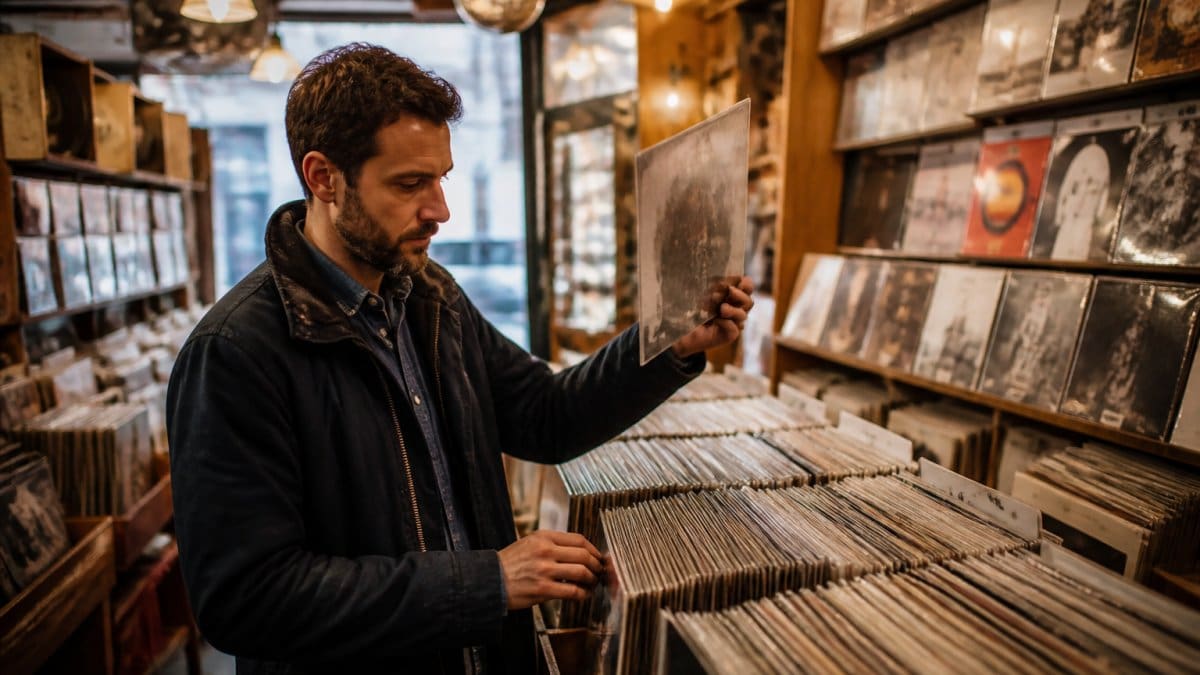
Then widen the net. Thrift stores, flea markets, and record fairs are where hidden gems surface, and estate sales often move vintage records at bargain prices.
Key Takeaway
The best local strategy is a habit, not a hunt: a set route, a call ahead, and a relationship with the shop that gets first look at incoming collections.
The best local strategy is a habit, not a hunt: a set route, a call ahead, and a relationship with the shop that gets first look at incoming collections.
Authenticity, Counterfeits, and Edition Verification
Counterfeit and unofficial pressings exist, and rare titles attract them. Verify the edition before money changes hands. Check the matrix and runout etchings against a reliable database, confirm the label design and catalog number, and look for packaging details that match the original release.
Red flags worth heeding:
- A price far below market for a supposedly rare pressing
- Blurry or reused photos that never show the actual copy
- A seller who cannot describe the matrix or label
In person, you have the advantage: you can read the runout and inspect the label directly.
Returns, Shipping Damage, and Dispute Resolution
Buying online means accepting some shipping risk, so know the return policy before you pay. A record can arrive warped, seam-split, or not matching its grade.
Document everything: photograph the packaging before you open it, then the record and sleeve. That evidence is what wins a dispute. Local purchases sidestep the issue, since you inspected the record and can often return it in person.
Frequently Asked Questions
Are rare vinyl records cheaper online or in local record stores?
It depends on the record and the seller. Local shops often price rare vinyl lower than online listings because they avoid marketplace fees and shipping, though individual store prices vary. Online, the listing price may look competitive but shipping, sales tax, and platform fees add to the total. Always compare the landed cost, meaning the price plus shipping and tax, before deciding. In-person purchases also let you inspect condition, which protects you from paying a rare vinyl price for a copy that needs replacing.
How can I tell if a rare vinyl record is in good condition before buying it?
Ask for the seller’s grade using the Goldmine standard, then request photos of the actual record, not stock images. Look for sleeve scuffs, spindle marks, and warping. For online buys, ask whether the record has been play-tested and whether the inner sleeve is original. In person, tilt the record under bright light to check for scratches and feel the edges for warping. A seller who answers condition questions specifically is usually more reliable than one who only says “excellent.”
What should I check before buying a rare record online?
Check the seller’s rating and review history, the exact pressing and catalog number, and whether the listing uses stock photos. Confirm the return policy and who pays return shipping. Ask about packaging: records should ship outside the sleeve in a proper mailer. Verify the total cost including shipping and tax. On marketplaces like Discogs or eBay, read the item description for grading notes and edition details. If anything is vague, message the seller before paying.
Is it safer to buy rare records in person or online?
In-person buying removes shipping risk and lets you inspect condition and verify the pressing yourself, which is safer for high-value records. Online buying offers wider selection but depends on seller accuracy and buyer protection. Marketplaces with review systems and dispute processes reduce risk, but you still cannot handle the record first. For expensive grails, many collectors prefer local shops or record fairs where they can examine the item. For common titles or specific pressings, online is often the only practical route.
How do I avoid overpaying for rare vinyl?
Research sold prices, not asking prices. Check completed sales on marketplaces and compare multiple listings for the same pressing. Use a price guide to understand the range for that edition, then factor in shipping and fees. Set a budget before you browse and walk away from auctions that exceed it. Local shops can be worth checking first because you save shipping and can negotiate. Condition matters most: a lower grade copy should cost noticeably less than a near-mint one.
Rare vinyl rewards patience and homework, whether you buy online or off the shelf. The collectors who do best research condition and market value first, then buy with confidence. If you would rather inspect a record in person before you commit, come browse our collection at Greatest Hits Music & Books. You can flip through used vinyl, trade in your own books and records for cash or store credit, and take home a find you have already held in your hands.