

Sub-Total: $0.00
Is Buying Used Vinyl Eco-Friendly? What Collectors Should Know
Table of Contents
- The Environmental Impact of Vinyl Records: What the Data Shows
- Used Vinyl vs. New Vinyl: A Lifecycle Comparison
- Vinyl Records vs. Music Streaming: Which Has a Lower Carbon Footprint?
- The Real Trade-Offs of Buying Secondhand Records
- How to Clean Used Vinyl Records So They Last for Decades
- Sustainable Vinyl Collecting: A Practical Decision Framework
- What to Do With Unwanted or Damaged Records
- Conclusion: The Greener Choice Is Often Already on the Shelf
- Frequently Asked Questions
Last Updated: October 12, 2026
The Environmental Impact of Vinyl Records: What the Data Shows
Is buying used vinyl eco-friendly? Yes, in most cases. A used record already exists, so choosing it avoids the energy, materials, and emissions of pressing a new copy.
Vinyl records start as oil-based plastic. Most pressings use PVC, a fossil-fuel material, and that fact drives much of the environmental impact.
Vinyl carries a real footprint no matter what. The question is how much you can avoid, and buying used is the biggest lever most collectors have.
Key Takeaway
The greenest record is almost always the one that already exists. Every used copy you buy keeps a new pressing from being manufactured.
The greenest record is almost always the one that already exists. Every used copy you buy keeps a new pressing from being manufactured.
Used Vinyl vs. New Vinyl: A Lifecycle Comparison
A used record skips the entire manufacturing stage, the single largest slice of a record’s footprint. A new pressing requires raw PVC resin, factory heat and pressure, a printed jacket and inner sleeve, shrink-wrap, and distribution. A used copy has already absorbed those costs; your purchase adds only transport and handling.
Break the lifecycle into stages to see where the impact sits:
- Material extraction and resin production. PVC is fossil-fuel-derived. Making virgin resin is energy-intensive, so a record’s footprint starts high before anything is pressed.
- Pressing. Records are stamped under heat and pressure, which means sustained energy use at the plant. This is the stage a used purchase avoids entirely.
- Packaging. Jackets, inner sleeves, and shrink-wrap are separate plastic and paper inputs. A new record arrives with all of them; a used one usually arrives with just its jacket.
- Distribution. New records move through plants, distributors, and retailers; used records move through trade-ins, estate sales, and local shops.
- Use phase. Both use almost no energy during playback, the stage where physical media beats streaming over many repeat listens.
- End of life. Both can be resold, donated, or downcycled. Neither is easily recycled as clean PVC.
The takeaway: a new pressing front-loads its impact into stages one through four. A used purchase skips stages one through three and usually shortens stage four. That is the environmental case for secondhand.
Where the used advantage can disappear
The comparison isn’t automatic. Three factors can erase the savings:
- Shipping distance. A used record ordered online may travel hundreds of miles in a mailer with plastic padding; a local pickup travels almost none. The longer the trip and the more packaging, the more savings get spent on transport.
- Condition. A worn copy that skips or has surface noise may get replaced, wiping out the benefit and adding a second record’s footprint. Grading matters more than price.
- Duplicates and impulse buys. A used record you never play still consumed transport and packaging. The savings only count if it stays in rotation.
The used advantage is largest for local, in-person, playable copies and smallest for cheap long-distance orders of records in uncertain condition.
| Factor | New Pressing | Used Record (Local) | Used Record (Shipped) |
|---|---|---|---|
| Raw materials | New PVC, fossil fuels | Already produced | Already produced |
| Manufacturing energy | High (heat, pressure, gas) | None | None |
| Packaging | Jacket, sleeve, shrink-wrap | Minimal | Mailer plus padding |
| Transport | Distribution network | Often zero | Hundreds of miles possible |
| Replacement risk | Low | Depends on grading | Higher without inspection |
| Best for | New releases, gifts | Collectors, budget buyers | Hard-to-find titles |
What the numbers can and can’t tell you
Published footprint estimates for records vary widely because they depend on the plant’s energy source, the resin supplier, the jacket printer, the shipping distance, and whether the study counts the full distribution chain or just pressing.
That uncertainty cuts both ways: no single number applies to every record, but the directional conclusion is stable. Skipping manufacturing is a large, real reduction, and shipping and replacement risk are the two variables most likely to shrink it.
Key Takeaway
The used advantage is largest when the record is local, playable, and one you’ll keep. It shrinks with distance, packaging, and condition risk, so buy in person when you can, and grade carefully when you can’t.
The used advantage is largest when the record is local, playable, and one you’ll keep. It shrinks with distance, packaging, and condition risk, so buy in person when you can, and grade carefully when you can’t.
Vinyl Records vs. Music Streaming: Which Has a Lower Carbon Footprint?
Streaming wins on carbon, but only if you listen a lot. Digital music uses energy through data centers and networks, yet it avoids plastic and pressing entirely. A single stream’s footprint is tiny.
The catch is volume: play the same album hundreds of times and the energy adds up.
So the greener choice depends on how you listen:
- Casual listener, huge variety: streaming has the lower footprint.
- Devoted fan, repeat plays: a physical record, especially a used one, spreads its impact over years.
This is where buying used vinyl pulls ahead again. You get the long-life benefit of physical media without paying the manufacturing cost.
Pro Tip
If a record is one you’ll play over and over, a used copy is the better environmental pick. If you’re sampling widely, streaming keeps your footprint lower.
If a record is one you’ll play over and over, a used copy is the better environmental pick. If you’re sampling widely, streaming keeps your footprint lower.
The Real Trade-Offs of Buying Secondhand Records
Secondhand buying isn’t automatically greener. The savings depend on how the record reaches you and what shape it’s in.
Here’s where used records lose their edge:
- Long-distance shipping. A cheap online order can cancel out the benefit through transport emissions and packaging.
- Condition surprises. A record graded generously may arrive scratched, leading you to buy a replacement.
- Duplicates. Buying speculatively can leave you with records you never play.
The fix is simple: shop locally when you can, inspect before you buy, and check grading carefully on online listings.
At Greatest Hits Music & Books, we let you flip through the crates in person. You can check condition, ask questions, and skip the shipping entirely. That’s the low-impact way to build a collection.
How to Clean Used Vinyl Records So They Last for Decades
Learning how to clean used vinyl records is the most underrated sustainability move in collecting. A clean record lasts longer and sounds better, so you replace it less often, carbon reduction you can do at home.
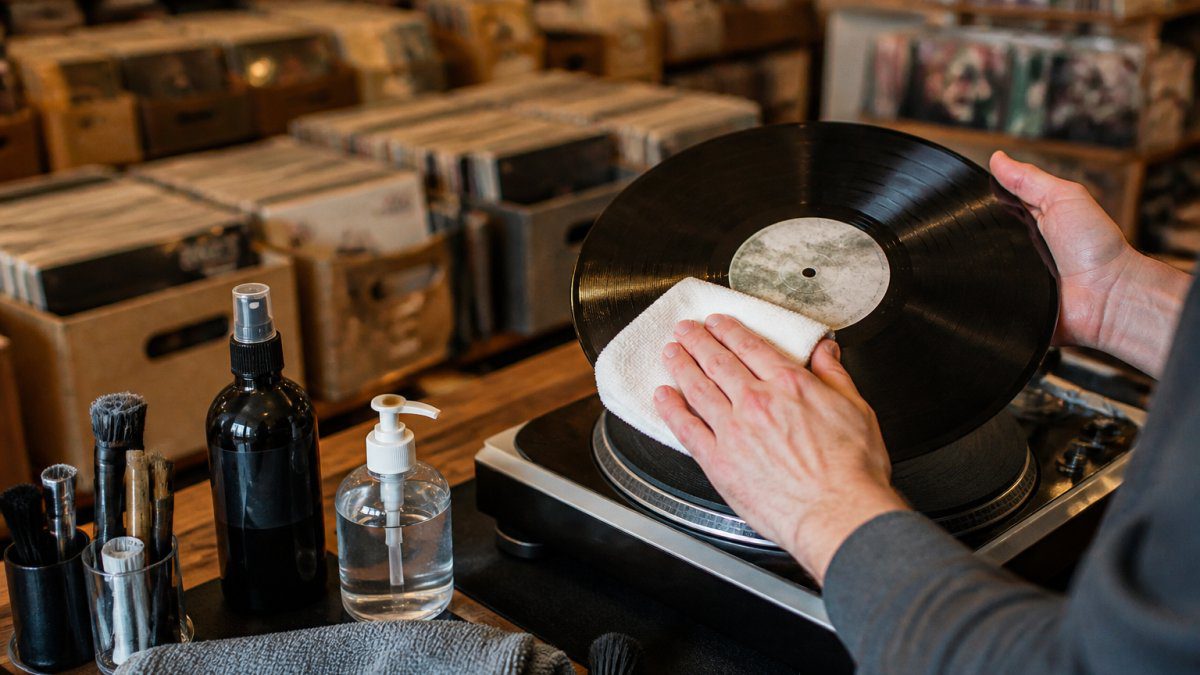
Follow these steps:
- Set up on a clean, flat surface. Work away from dust and direct sun.
- Brush off loose dust first. Use a carbon-fiber brush and follow the grooves in a circle.
- Apply a little cleaning fluid. Use a record-safe solution, never household cleaner.
- Wipe with a microfiber cloth. Go with the grooves, not across them.
- Let it air-dry fully. Moisture left in the grooves can damage them.
- Store upright in a sleeve. Never stack records flat or in a hot room.
Do this every few plays and your used records can stay in rotation for decades. That lifespan is the whole point of sustainable collecting.
Watch Out
Never use paper towels or rough cloths. They leave fibers in the grooves and cause the scratches that force you to replace a record early.
Never use paper towels or rough cloths. They leave fibers in the grooves and cause the scratches that force you to replace a record early.
Sustainable Vinyl Collecting: A Practical Decision Framework
Sustainable vinyl collecting comes down to a few clear choices. Use this framework before you buy:
- Is it a record you’ll play often? If yes, buy physical. If you’re just curious, stream first.
- Can you get it used and locally? That’s the lowest-impact option. Check crates and trade-ins first.
- Is the condition solid? A playable used copy beats a new pressing. A damaged one beats nothing.
- Do you need it shipped? If so, batch orders to cut trips and packaging.
- Can you trade instead of buy? Store credit for your unwanted media keeps records in circulation.
That last point matters. Selling or trading old records extends their life and keeps new ones from being made. Greatest Hits Music & Books pays cash for books and offers store credit for books, music, movies, games, and figures, so unwanted media finds a new home instead of a landfill.
What to Do With Unwanted or Damaged Records
Don’t toss a record just because it’s scratched or you’ve outgrown it. End-of-life choices determine whether the plastic stays in circulation or ends up in a landfill. Work down this list before considering the trash.
1. Resell or trade in
This is the highest-value option because it keeps the record in use as a record. Even a worn copy can find a buyer who wants the cover art, a specific pressing, or a track that isn’t streaming. Grade honestly before listing:
- Near mint or better: worth listing individually or bringing to a shop that buys used media.
- Very good to good: playable with light noise; often accepted for store credit.
- Good minus or worse: may still sell as a filler copy or for the jacket, but expect low value.
- Unplayable: skip resale and move to the next option.
If you’re trading rather than selling, store credit for books, music, movies, games, and figures keeps the record in circulation and keeps you from buying new.
2. Donate
Libraries, school music programs, community radio stations, and thrift stores accept records, though not all can use damaged ones. Call ahead and ask what they do with items they can’t sell. A donation that gets played is a reuse win; one that gets binned is not.
3. Reuse for something else
A record that won’t play can still serve as wall art, a display piece, or craft material. This is genuine reuse, the plastic stays in its original form and needs no energy to reprocess.
4. Recycling, and why it’s harder than it sounds
Vinyl records are made of PVC, one of the harder plastics to recycle. It’s a mix of resin, stabilizers, and sometimes colorants, and it doesn’t melt down as cleanly as PET or HDPE. Most curbside programs won’t take it.
That means “recycling” a record often isn’t closed-loop recycling at all. Check whether a program actually reprocesses PVC into new PVC products or simply collects it for a different use.
5. Downcycling, the honest last stop
Downcycling turns a material into a lower-grade product rather than the same thing. Damaged records become bowls, coasters, clocks, and craft items. The plastic stays out of the landfill, but it doesn’t become a new record, and the item it becomes usually can’t be recycled again. Better than disposal, worse than reuse.
The order that actually matters
Reuse first, recycle second, downcycle last, disposal only if nothing else works. Every record you resell, trade, or donate is one less new pressing demanded and one more disc kept in play, the part of the lifecycle you control most directly.
Pro Tip
Before you decide a record is finished, clean it and play it once more. Surface noise that sounds like damage is often just dirt, and a record you were about to discard may have years of listening left in it.
Before you decide a record is finished, clean it and play it once more. Surface noise that sounds like damage is often just dirt, and a record you were about to discard may have years of listening left in it.
Conclusion: The Greener Choice Is Often Already on the Shelf
The evidence points one way: buying used vinyl is eco-friendly when you buy locally and keep the record in play. You skip manufacturing, cut packaging and shipping, and extend a product’s life instead of demanding a new one.
That’s the idea behind Greatest Hits Music & Books.
Ready to build a greener collection? Shop our collection and find your next favorite record on the shelf.
Frequently Asked Questions
Is it okay to buy used vinyl?
Yes, and for most collectors it’s the smarter move. Used vinyl keeps an existing record in circulation instead of triggering new manufacturing, which uses oil-based plastic and natural gas. Condition matters more than age: check for deep scratches, warping, and mold before buying. A clean VG+ record often sounds nearly as good as a new pressing. Stores that grade honestly and let you inspect before purchase make used vinyl a low-risk choice.
Does buying used vinyl reduce environmental impact compared to new pressings?
It avoids the largest footprint hit, which is production. New records require vinyl pellets made from fossil fuels, plus energy for pressing, packaging, and shrink-wrap. A used copy skips all of that. The main remaining impact is shipping, so buying locally or in person cuts transport emissions further. If you’re weighing used vinyl vs. new vinyl, the used option almost always comes out ahead on lifecycle impact.
Is buying a used record better for the environment than streaming music?
It depends on how much you listen. Streaming uses data centers and devices continuously, so heavy listening adds up over years. A used record has a one-time footprint from its original manufacture, then near-zero energy beyond your turntable. For albums you play repeatedly, used vinyl records vs. music streaming usually favors the physical copy. For casual one-off listening, streaming wins.
How can I make my vinyl collection more sustainable?
Start with sustainable vinyl collecting habits: buy secondhand first, clean and store records properly so they last, and sell or trade albums you no longer play instead of discarding them. Avoid shrink-wrap waste by reusing inner sleeves. When new pressings are unavoidable, look for labels using recycled or bio-vinyl materials. Local trade-ins keep records circulating in your community and cut shipping emissions.