

Sub-Total: $0.00
Finding Affordable Vinyl Records in Mississippi
Table of Contents
- Why Finding Affordable Vinyl Records in Mississippi Takes Local Knowledge
- Mississippi Record Stores Worth the Drive
- Where to Hunt for Cheap Vinyl Records
- What Drives Vinyl Record Prices Up or Down
- How to Grade Used Vinyl Records Before You Buy
- Trade, Sell, and Swap Your Way to a Bigger Collection
- Building a Budget Vinyl Trail Through Mississippi
- Conclusion
- Frequently Asked Questions
Last Updated: October 9, 2026
Why Finding Affordable Vinyl Records in Mississippi Takes Local Knowledge
Finding affordable vinyl records in Mississippi rewards shoppers who know which towns have real record shops and which ones only look good in a search result. This guide covers where to dig, what drives prices up or down, how to grade a used record before you pay, and how to build a budget vinyl trail across the state that actually pays off.
Recording Industry Association of America annual vinyl sales data
Mississippi Record Stores Worth the Drive
Most store roundups just list names and addresses. For a budget shopper, that is useless. What matters is which shops price to move, which ones price to collectors, and which ones are worth a detour only if you have trade credit or a specific title in mind. The breakdown below sorts the state’s independent shops by what they actually do for a tight budget.
Bargain-first shops (deep used bins, low entry prices)
These are the shops where a $20 bill still buys a small stack. Inventory skews toward common pressings, reissues, and VG-to-VG+ copies of classic rock, country, soul, and gospel. Expect to dig, not browse.
- Greatest Hits Music & Books (Tupelo): The trade-in model is the budget lever here. The shop pays cash for books and offers store credit for music, movies, games, and figures, so a box of unwanted media converts directly into used vinyl. Used inventory is priced to move, and the mix leans toward the regional genres north Mississippi collectors actually spin.
- Maynard’s Music (Ocean Springs): Used vinyl, CDs, and cassettes with coast-market pricing. Small footprint means the bins turn over slowly, so a second visit a few weeks later is worth it.
- Cool Vinyl Records – Antiques & More (Gautier area): The antiques pairing is the tell, this is a booth-style setup where vinyl is priced like flea-market stock, not collector stock. Best for common titles and oddball finds.
Mid-range shops (fair prices, condition-driven)
These shops price on condition and demand, so the same title can swing widely depending on grade. Bring the grading checklist below and you can still walk out under budget.
- Little Big Store (Raymond): Collectors consistently describe prices as reasonable rather than cheap. That is a fair signal that condition and rarity set the number, not a flat markup. Good for filling specific gaps in a collection.
- T-Bones Records & Cafe (Hattiesburg area): Records plus a cafe stop, which makes it a natural anchor for a day trip. Used stock is real but not bottom-of-the-barrel pricing.
- Good Earth Records (Bay St. Louis): New and used vinyl alongside CDs, tapes, and music books. The used section is the budget play; new stock is priced at standard retail.
Special-order and trade-heavy shops
- Marley’s Music and Mobile Records (coast area): Listings suggest a mix of used stock and special ordering. If a shop will order a title for you, ask whether the special-order price beats what you would pay online after shipping, sometimes it does, sometimes it does not.
Coastal Mississippi visitor directory listing for Good Earth Records
Pro Tip
Call ahead and ask two questions before you drive: “How deep is your used section right now?” and “Do you take trade credit?” A shop with a thin used bin and no trade program is rarely worth a long drive on a budget.
Call ahead and ask two questions before you drive: “How deep is your used section right now?” and “Do you take trade credit?” A shop with a thin used bin and no trade program is rarely worth a long drive on a budget.
How to read a shop’s price tier in 60 seconds
Walk in and scan three things: the bargain bin (if there is one), the sticker prices on common titles like a well-worn Fleetwood Mac or Eagles LP, and whether the counter advertises trade credit. A shop with a real bargain bin, sub-$10 common titles, and a posted trade policy is a budget shop. A shop with no bargain bin and $25+ common titles is a collector shop, fine to visit, but not where your dollar stretches.
Where to Hunt for Cheap Vinyl Records
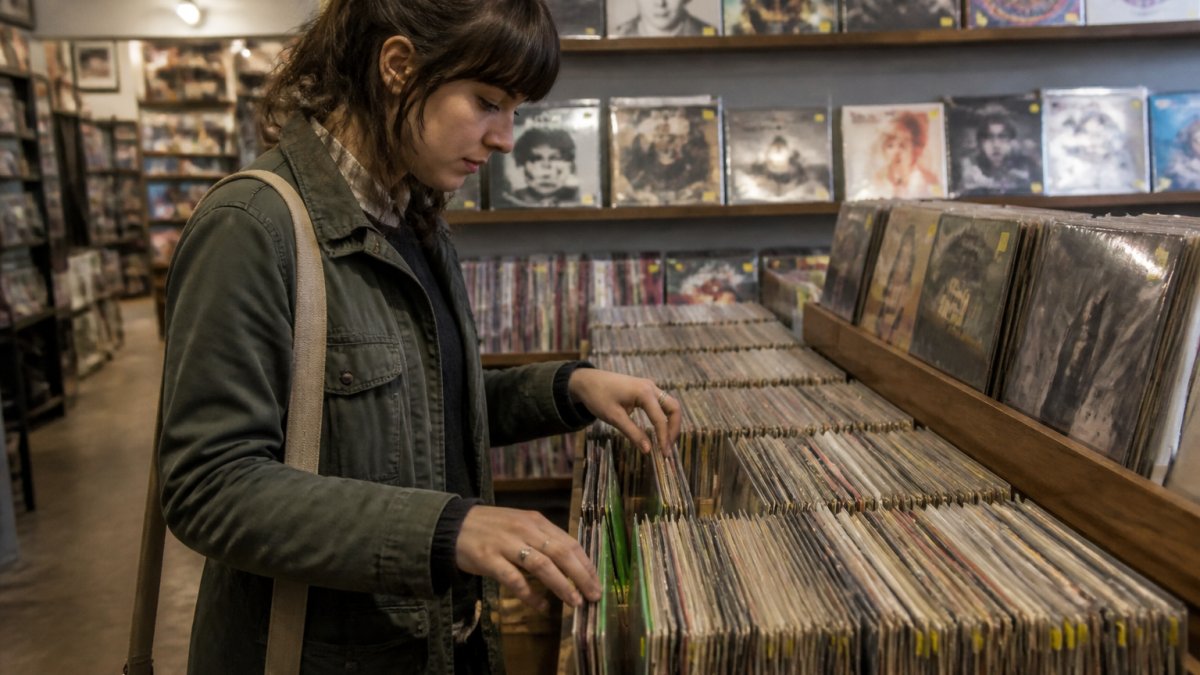
Cheap vinyl records turn up in three places: the bargain bin, the trade-in counter, and the estate sale. Estate sales and flea markets around Tupelo and the Delta can surface vintage vinyl at low price points, but you need to arrive early and check condition on the spot.
Pro Tip
Bring a small flashlight and a microfiber cloth when you dig. Tilting a record under direct light reveals scuffs and pressing defects that a quick glance misses, and a fast wipe removes dust before you judge the surface.
Bring a small flashlight and a microfiber cloth when you dig. Tilting a record under direct light reveals scuffs and pressing defects that a quick glance misses, and a fast wipe removes dust before you judge the surface.
What Drives Vinyl Record Prices Up or Down
Vinyl pricing comes down to four levers: pressing, condition, artist demand, and format variant. Every guide says that. What most guides skip is how a budget shopper should pull those levers in their favor, and when buying local actually beats buying online after shipping.
The four levers, and how to pull them your way
| Price Factor | Pushes Price Up | Pushes Price Down | Budget Move |
|---|---|---|---|
| Pressing | First press, original label | Later reissue, repress | Buy the reissue unless the original is the point |
| Condition | Mint or near mint sleeve and disc | Scuffs, ring wear, seam splits | Target VG+ discs in VG sleeves |
| Artist demand | Active fanbase, tour cycles | Forgotten catalog titles | Shop off-cycle, not during a tour |
| Format | Original mono or rare variant | Common stereo pressing | Skip variants unless you collect them |
The single biggest budget lever is the sleeve/disc split. A record with a clean VG+ disc and a VG sleeve, ring wear, a seam split, a cut corner, often sells for a fraction of the same disc in a NM sleeve, and it plays identically.
The second lever is timing. Prices on a given artist spike during tour cycles and reissue campaigns, then settle. If a title is not urgent, wait out the spike.
Local vs. online: when each one is actually cheaper
This is the comparison most store guides avoid, and it is the one that decides your real cost.
Buy local when:
- The record is common. A used copy of a widely pressed classic rock, country, or soul LP is usually cheaper in a shop’s used bin than online, because online sellers add shipping and the common-title market is saturated.
- You can inspect condition in person. Online grading is the buyer’s biggest risk; a VG+ listed online can arrive as a VG. In a shop, you grade it yourself before you pay.
- You have trade credit. Credit only spends locally, and it effectively discounts the sticker price.
Buy online when:
- The title is rare or regionally specific and simply is not in any shop within driving distance.
- You are buying in bulk. Shipping is often flat or capped, so the per-record cost drops as the order grows, this is the one scenario where online reliably beats local on price.
- You want a specific pressing. Shops stock what walks in; online sellers stock by catalog number.
A practical rule: for any single record under roughly the price of a new release, check local first. For a multi-record order or a specific pressing, price the online total including shipping before you commit to a drive.
Key Takeaway
Affordability is not just the sticker price. It is sticker price minus trade credit, plus gas, plus the risk of a misgraded online order. Run that math before you decide where to buy.
Affordability is not just the sticker price. It is sticker price minus trade credit, plus gas, plus the risk of a misgraded online order. Run that math before you decide where to buy.
The condition math that saves the most money
The gap between a NM copy and a VG+ copy of the same title is often larger than the gap between VG+ and VG. That means the smartest budget buy is usually the top of the lower grade, a clean VG+, not the bottom of the higher grade. You get nearly all the sound quality for a fraction of the price, and you leave the mint premium to collectors who want the sleeve, not the music.
How to Grade Used Vinyl Records Before You Buy
Grading used vinyl records before you buy protects your budget and your collection. Most shops use the standard Goldmine-style grades, so learn the shorthand and you can judge a price tag in seconds.
- Mint (M): Sealed or flawless. Rare in used bins and priced accordingly.
- Near Mint (NM): Looks unplayed. A faint mark or two under bright light.
- Very Good Plus (VG+): Light scuffs that do not affect play. The sweet spot for budget buyers.
Check three things in the store: tilt the disc under light for scratches, run a fingernail lightly along the edge for warping, and inspect the sleeve corners for water damage.
Watch Out
Never buy a record with a deep gouge across the grooves, even at a bargain-bin price. That scratch will skip or pop on every play, and no cleaning or grading trick fixes physical groove damage.
Never buy a record with a deep gouge across the grooves, even at a bargain-bin price. That scratch will skip or pop on every play, and no cleaning or grading trick fixes physical groove damage.
Trade, Sell, and Swap Your Way to a Bigger Collection
Trading is the fastest way to grow a music collection on a budget. Instead of paying cash for every LP, you bring in books, CDs, movies, games, or figures you no longer want and convert them into store credit.
What most guides miss is that trade-in value depends on condition and demand, not on how much you originally paid. A clean, in-demand title earns more credit than a worn copy of the same album.
Key Takeaway
The trade-in counter is a budget tool, not a one-time purge. Treat every trade as a deposit into your next record purchase and your collection compounds over time.
The trade-in counter is a budget tool, not a one-time purge. Treat every trade as a deposit into your next record purchase and your collection compounds over time.
Building a Budget Vinyl Trail Through Mississippi
A budget vinyl trail turns a weekend drive into a crate-digging route. Plan stops by region so you are not crisscrossing the state, and hit the shops with the deepest used inventory first. The itinerary below groups stops into a rough north-to-south route, with a focus on shops that carry second-hand stock.
| Stop | Region | What to Expect |
|---|---|---|
| Greatest Hits Music & Books | Tupelo | Used vinyl, trade-in credit, nostalgic finds |
| Little Big Store | Raymond | Collector stock, reasonable prices |
| T-Bones Records & Cafe | Hattiesburg area | Records plus a cafe stop |
| Good Earth Records | Bay St. Louis | New and used vinyl, CDs, tapes |
| Maynard’s Music | Ocean Springs | Used vinyl, CDs, cassettes |
Start in Tupelo. Bring cash for flea markets and estate sales, and a tote with stiff dividers so your finds ride home without corner damage.
Library of Congress guide to preserving sound recordings
Conclusion
Building a vinyl collection on a budget takes patience, local knowledge, and a willingness to dig. The collectors who win are the ones who grade before they buy, trade what they no longer spin, and know which Mississippi shops carry real used inventory. Greatest Hits Music & Books makes that easier: we carry a curated mix of used vinyl records and nostalgic collectibles, we pay cash for books, and we offer store credit for music, movies, games, and figures you bring in.
Frequently Asked Questions
Where can I find affordable vinyl records in Mississippi?
Independent shops, antique malls, and thrift stores across the state carry used vinyl records at a range of price points. Stores in Tupelo are good starting points. Bargain bins and second-hand inventory usually cost less than new pressings, and shops that buy collections regularly turn over stock, so new arrivals show up often. Call ahead to confirm hours and current inventory before making a long drive.
What is a good price for a used vinyl record?
There is no single fair price, because condition, pressing, and demand all move the number. A common, well-worn LP from a bargain bin should cost far less than a clean original pressing of a sought-after title. Judge each record on its own merits rather than a flat rule.
Are thrift stores good places to find cheap vinyl records?
Thrift stores can be the cheapest source, but the trade-off is unpredictability. Stock depends on what gets donated, condition varies widely, and popular titles disappear fast. Check the vinyl for deep scratches, warping, and water damage before buying, and expect to clean most finds. For a steadier supply of used vinyl records, pair thrift hunting with regular visits to independent record shops that curate their inventory.
How can I tell if a used vinyl record is worth buying?
Pull the record from the sleeve and hold it under good light. Surface scratches you can feel with a fingernail will usually be audible. Look for warping by laying the disc flat, check the label for water stains, and confirm the inner sleeve is intact. Sealed or mint condition copies command more, so weigh the asking price against how the record actually looks, not just the cover.
Is it cheaper to buy vinyl online or in a Mississippi record store?
Online listings often add shipping, and you cannot inspect condition before paying. A local shop lets you flip through the record, check the pressing, and avoid shipping costs entirely. Stores that buy and trade used inventory also price to move stock, which keeps second-hand titles competitive. For high-value or collectible pressings, compare both, but for everyday crate digging, in-person browsing usually wins on total cost.